RECENT PUBLICATIONS |


Playing with Fire
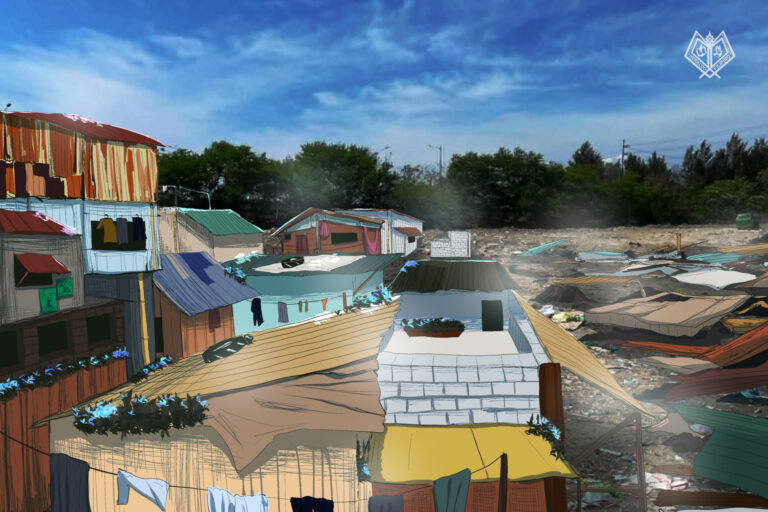
Fisherfolk and residents of Bacoor, Cavite, are raising alarms over a disturbing pattern of fires affecting their coastal communities, suspecting that these occurrences—alongside looming reclamation and infrastructure projects—are not mere accidents, but deliberate acts tied to demolitions orchestrated by political figures and private corporations.
Progressive groups such as Pambansang Lakas ng Kilusang Mamamalakaya ng Pilipinas (PAMALAKAYA) and Kalipunan ng Damayang Mahihirap (Kadamay) – Cavite have publicly voiced their concerns, claiming the successive fires in February were “highly believe” to have been intentional to force poor families out of their homes to make way for commercial development.
The HERALDO FILIPINO interviewed involved parties, including residents of Zapote III and Talaba VII, as well as Bureau of Fire Protection (BFP) – Bacoor’s FO1 Erica Joyce Salazar, who shared their insights about the pattern behind the incidents.
Patterns of flames
A resident from Zapote III revealed that many of the affected neighborhoods are located in areas earmarked for reclamation and development projects, prompting fears that fire is being used as a convenient tool for demolition and displacement.
In an exclusive interview, Aries Soledad, Secretary General of PAMAKALAYA – Cavite, cited the fast-tracked development of commercial projects—such as a planned Robinsons Mall in Maliksi I and III—as raising suspicions that fire incidents are part of a broader scheme to clear residents from these areas. Large-scale reclamation ventures like the 420-hectare project by Frabelle Corporation and other city-backed initiatives are also identified to be situated near previously affected neighborhoods.
Soledad added that the “demolition-by-fire” tactic is not new, and that the fires began occurring as far back as the administration of former Mayor Lani Mercado-Revilla. He claimed that the displacement of residents from barangays like Talaba II, Maliksi, Kaingin, Digman, and Sineguelasan was linked to road-widening and reclamation efforts.
Fisherfolk and the urban poor have even coined monikers for former Mayor Revilla, referring to her as the “Reclamation Queen” and “Manununog Queen” for allegedly initiating demolitions masked as fire incidents, efforts which critics believe are now continued by current Mayor Strike Revilla.
The repetition and timing of these incidents have prompted not just residents, but also progressive groups to suspect foul play. Soledad noted that the pattern of fires, often occurring multiple times in the same areas and predominantly at night or dawn, suggests a deliberate effort rather than isolated electrical mishaps.
“Given these circumstantial precedents, there is a high probability that the fire incidents were not by accident, but rather intentional,” the PAMALAKAYA – Cavite Secretary General mentioned in an interview with a separate media outlet.
The 420-hectare reclamation and development project along Manila Bay, comprising two artificial islands and infrastructure zoned for residential and commercial use, is part of the city’s “Green and Blue Network” to spur economic growth. But fisherfolk and residents argue that this so-called development comes at their expense, risking permanently displacing coastal communities.
“Fishermen and the poor along the coast of Cavite are determined to defend their livelihood and community against destructive reclamation and its accompanying demolition,” said Arni Villalon, a member of PAMAKALAYA – Bacoor, in an interview.
Residents also highlighted that earlier evictions in fishing communities have already forced families to relocate to distant areas, such as Naic, Cavite, where there is no access to fishing grounds or alternative livelihood opportunities. Many ended up returning to their original homes despite the risks. Moreover, Soledad shared that relocation offers often came with a year of free housing, followed by payment schemes under the National Housing Authority (NHA). Financial aid, allegedly ranging from P20,000 to P40,000, was reportedly diminished by unclear deductions. Complaints of substandard living conditions, lack of potable water, and poor access to services abound.
Lack of action
Further aggravating the situation, residents complain of unequal aid distribution for fire victims. According to Allyn Marmol, resident of Zapote III, some families received as little as P17,000 in assistance, while others allegedly got more—fueling frustration over inconsistent support.
“Ang bigay nga nila sa’min ay nasa P17,000 lang… Sa iba nga raw [na] mga lugar, malalaki ang perang ipinamigay—halos umabot daw ng P100,000,” she claimed.
Adding to their grievances, the promised pabahay (housing) for displaced families remains unfulfilled. Residents from multiple barangays said that no actual relocation took place. He also stressed that life in relocation areas is difficult. Schools and markets are far, clean water is lacking, and employment opportunities are scarce. In some areas, the water even smells foul despite being filtered.
Some residents accused firefighters of a poor response. One alleged that a firetruck blocked the entrance, slowing rescue. Another claimed that the water used to douse flames was mixed with gasoline, worsening the blaze.
In the case of a major fire in Zapote III that displaced 1,400 families, Soledad claimed that the barangay captain and local officials delayed firefighters from entering, allowing the flames to grow out of control.
“Sabi nila (BFP), maglulunsad sila ng investigation, pero wala namang investigation na naganap… Kung sinsero sila sa usapin ng sunog, sa malawakang sunog na nagaganap, dapat pinangungunahan ng BFP ‘yung paano ba makakaiwas ‘yung mamamayan sa malawakang sunog na nagaganap sa Bacoor. Pero wala silang ginagawang pamamaraan (kung) paano ito gawin kundi rumeresponde sila, pero sa pagkakaalam namin sa mga nakaraang sunog, may laman nang gas ‘yung tubig,” Soledad shared.
Another resident echoed these frustrations, stating how they received zero financial aid from the municipal government. He also allegedly saw armed personnel stationed around the burned areas, preventing residents from returning.
Still, not all residents shared these criticisms, with Marmol acknowledging the firefighters’ prompt and effective response in their area.
Tracing its roots
Despite arson allegations, FO1 Salazar cited in an interview that most fires stemmed from electrical causes, pointing to overloaded appliances and faulty wiring as top culprits.
Although Salazar acknowledged that some residents suspect arson, she emphasized that such claims remain unverified: “May mga nagsasabi na sinunog daw, pero siyempre, ‘pag sabi lang naman, hindi natin p’wedeng i-conclude.”
Investigations are reportedly underway to collect evidence and determine the fires’ origins. However, community leaders and residents view the official explanations, such as fires caused by domestic disputes, with skepticism.
Safeguarding the community
In the meantime, BFP Bacoor shared that it has implemented several preventive measures to reduce fire risks, especially as the dry season heightens the danger of grassfires.
Ahead of summer, the bureau said that it began issuing notices to owners of vacant lots and overgrown properties, urging them to clear dry vegetation that could easily ignite under intense heat or magnified sunlight. It also coordinates closely with local government units (LGUs) under its Oplan Ligtas na Pamayanan program, where firefighters conduct nightly patrols with fire trucks to share safety tips and increase visibility in at-risk communities.
However, residents and community leaders dispute these claims, saying no such notices or preventive actions have been carried out. Many argue that the supposed patrols and warnings are either insufficient or non-existent, highlighting a disconnect between official reports and community experiences.
What the future holds
Despite official claims of pointing to accidental causes, residents and progressive groups are calling for independent investigations and the prosecution of entities behind the fires.
“Actually, dapat gawin ng lokal na pamahalaan na maglunsad sila ng investigations… Wala naman silang (BFP) nilabas na investigation, kundi nagsagawa rin talaga kami ng investigation na kaya naman talaga sinusunog, dahil sa proyekto,” Soledad stated.
A resident from Talaba VII added that the efforts should not stop with investigations, and that perpetrators must be held accountable under the law.
In the meantime, protest actions continue being staged across Cavite, as residents stand firm in defending their homes, livelihoods, and rights.
Originally published in Heraldo Filipino Volume 39, Issue 2
Art slider by Altheia Clarisse Rara