RECENT PUBLICATIONS |

Built to Impress?
“A day in the life of a college student from DLSU… Bukid Edition!”
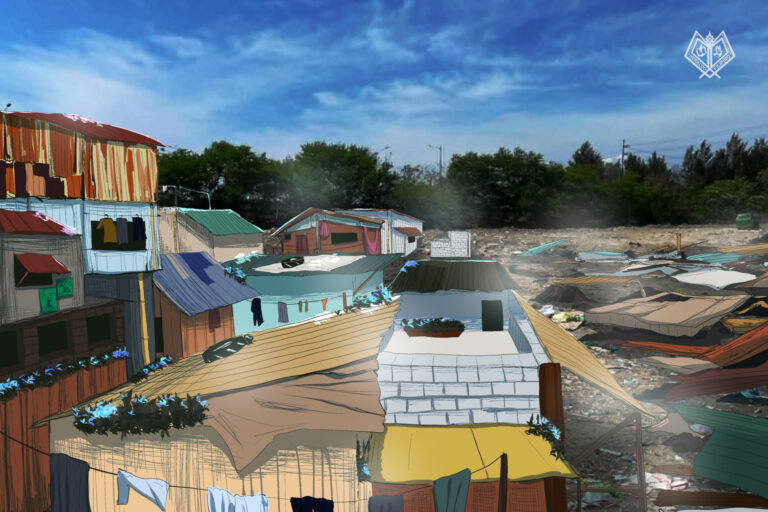
To many outsiders, De La Salle University – Dasmariñas (DLSU-D) embodies prestige—modern buildings, green spaces, and a “high-end” academic environment often associated with the Lasallian name. Yet behind this polished exterior are uneven development, accessibility issues, and persistent questions about whether the promised “Lasallian experience” truly reflects on-the-ground realities students face and the rising cost of education.
Over the past academic years, the University has undertaken major infrastructure projects, including the completion of the College of Engineering, Architecture, and Technology (CEAT) building—also known as the Maria Salome Llanera Hall (MLH), the rehabilitation of the former College of Tourism and Hospitality Management (CTHM) building—now Purificacion Borromeo Hall (PBH), upgrades to learning spaces, and the ongoing renovation of student areas such as the Julian Felipe Hall (JFH) kubo.
While administrators frame these projects as long-term planning, student and faculty experiences reveal a more complicated reality shaped by inconvenience, lingering gaps, and perceptions of selective prioritization.
What comes first
According to Dr. Sonia Gementiza, Chief Administrative Officer (CAO), recent infrastructure efforts are rooted in a campus-wide assessment conducted after pandemic disruptions.
“Last school year, we assessed all the current status of our facilities,” she said, explaining that this assessment informed a five-year development plan.
Instructional spaces were prioritized, particularly the completion of the CEAT and CTHM buildings, to address classroom and laboratory shortages.
“Kung ano ‘yung kailangan muna ng ating mga estudyante—especially instructional facilities—we prioritized that,” she said, adding that requirements from the Commission on Higher Education (CHED) also influenced which facilities were addressed first.
She emphasized that these decisions undergo multiple layers of evaluation, from design proposals and cost estimation by in-house engineers to justification before decision-making bodies, to ensure alignment with student needs and available resources.
Reality check
For some students, renovations have sparked renewed motivation. Arwen Go, a Business and Operations Management (BOM) student, mentioned that the visible upgrades challenged her initial perception of the University’s priorities.
“Na-impress ako sa school kasi mayro’n pala silang budget para mag-renovate,” Go shared, adding that the improvements “somehow boosted” her eagerness to learn.
Similarly, Forensic Science student Marlo Maunahan said the JFH kubo’s renovation improved student experience, particularly for organizations setting up booths.
“Before, super struggling talaga ng mga tables… ngayon na na-upgrade na siya, mas better na ang experience,” he said, citing improved walkways and the absence of roof leaks.
Dr. Gementiza said the kubo renovation improved structural stability by adding steel supports, better roofing, and outlets to reduce unsafe cords, as part of a wider campus rehabilitation plan.
Yet improvements have not been without shortcomings. Faculty member Jan Daenell Bancud, a part-time instructor from the College of Information and Computer Studies (CICS), noted that some classrooms, particularly in CTHM, remain difficult teaching environments due to harsh lighting and lack of televisions.
“Hindi ko maipakita sa kanila [students] nang maayos ‘yung presentation ko,” Bancud said.
AB Psychology student Walter Anthony Naguillen described the experience as “mixed,” expressing frustration over what he perceived as selective prioritization.
“It feels like they just prioritized one building instead of other buildings that have been long around,” Naguillen said, pointing to older facilities like JFH that remain worn down.
These concerns extend beyond classrooms. Parking remains a persistent issue, reflecting the University’s space limitations.
Dr. Gementiza said the administration is improving parking in select areas while promoting e-jeeps and carpooling, though plans for a two-storey facility near the College of Business Administration and Accountancy (CBAA) remain unfeasible. Offices affected by the planned conversion of Gregoria Montoya Hall (GMH) into a student hub will be temporarily relocated.
Design meets functionality
Recent campus renovations have brought aesthetic changes that students acknowledge make the campus feel more welcoming and conducive to learning.
Maunahan described the CEAT building as beneficial to learning, highlighting spacious classrooms, wide hallways, and adequate air-conditioning.
But development remains uneven. While some buildings are upgraded, others—particularly older classrooms in JFH—remain outdated. Naguillen added that functionality is often overlooked, describing some classrooms as “not usable” or “embarrassing to use.”
Jonnel Torreda, a Political Science student, added that if the University cannot afford to build quality facilities, it should at least provide usable ones. Bancud echoed this, stating, “I think there is a balance in design and functionality… mas maging focused sila sa functionality.”
As the University modernizes, accessibility remains inconsistent, with some renovations inclusive and others still limiting students with disabilities.
Maunahan recalled that CEAT elevators were initially non-operational; although later access was allowed during accreditation visits, steep staircases remain a challenge.
The contrast between renovated spaces and older classrooms highlights the need for balanced development. While aesthetic improvements are welcome, students emphasized that improvements should address both appearance and classroom functionality.
The price of education
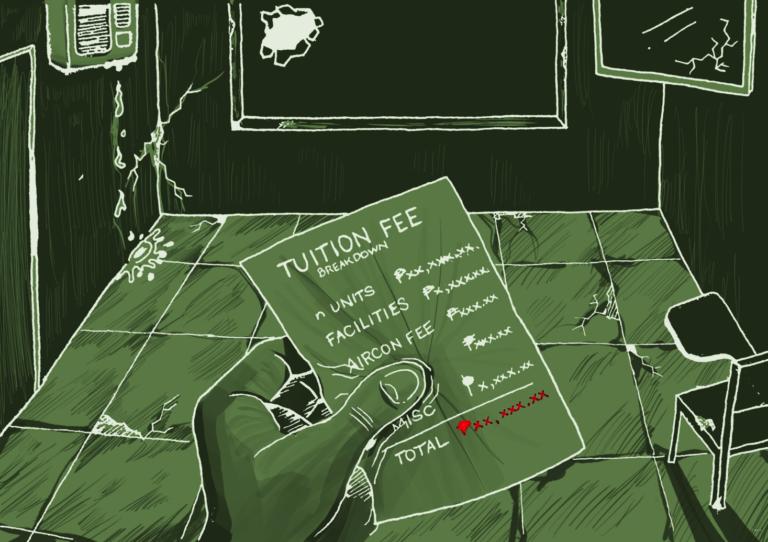
Despite administrative assurances, students remain unconvinced that facilities reflect tuition costs. Torreda cited yearly tuition increases not matched by all-around improvements in infrastructure, WiFi, and academic resources.
Maunahan noted that while some colleges benefit from newer rooms, others contend with broken chairs, cracked floors, and poorly functioning doors. “Nagdi-differ talaga kung saan kayo nagro-room,” he said.
Faculty member Bancud echoed this disparity, stating that while some colleges, such as CEAT, have seen major upgrades, others—particularly the old College of Science (COS) building—remain rundown.
Dr. Gementiza said about 80 percent of tuition increases go to salaries and benefits, while the remaining funds support operations and infrastructure, all approved by the Board of Trustees (BoT).
Gaps to fill
Despite new developments, some essential spaces remain overlooked. Torreda called WiFi issues a “very central problem” due to professors’ reliance on online materials, noting that the lack of outlets limits extended study sessions—among other things.
Dr. Gementiza said the old library is under reassessment after structural issues caused its closure.
From the faculty perspective, Bancud cited the lack of basic classroom technology, while some students struggle with Information and Communications Technology Center (ICTC)’s Mac laboratories due to unfamiliarity with the operating system.
Dr. Gementiza, meanwhile, shared plans to convert parts of GMH into learning hubs and an initiative to improve campus safety following a rare ceiling accident earlier this academic year.
Student voices count
Students and faculty emphasized the need for stronger student participation in infrastructure decisions. Go and Maunahan called for regular surveys to capture students’ experiences, while Naguillen suggested monthly evaluations.
Torreda pointed to institutional avenues already in place, such as the University Student Government (USG)’s seat in the Academic Council and Council of Deans, but lamented that these channels remain largely underutilized.
“That is a very big deal,” Torreda said, referring to the seats, “but it has been largely unutilized—or wasted, honestly.”
Dr. Gementiza said student feedback is collected through QR reports, formal surveys, and department consultations, which inform planning decisions.
A campus still becoming
University administrators said infrastructure development is constrained by budget realities. While many projects are underway, others remain part of a long-term plan.
As buildings rise and spaces are renovated, the Lasallian image of excellence continues to be tested by everyday campus realities. Students and faculty measure progress not just by new buildings, but by whether improvements truly serve the community.
Behind the glamour of DLSU-D, the campus remains a work in progress—a reflection of both the promise of development and the gaps that still demand attention.
Art slider by Jorenz Romer Quinto
Originally published in Heraldo Filipino Volume 40, Issue 1.