RECENT PUBLICATIONS |

To all the Sunshines
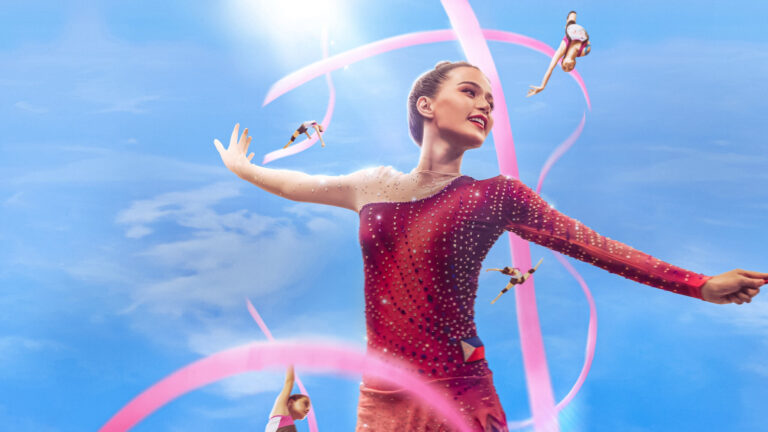
A vast world of constricted options—this was the gripping reality that faced Sunshine Francisco (Maris Racal) when her promising Olympic future hung in the balance due to an unplanned pregnancy at 19.
In its taut running time, Antoinette Jadaone’s Sunshine (2024) unveils a compelling portrait of what it means to be a woman in a world so vehemently marked by antagonistic expectations—a world where everything is set up against you.
A mother too soon
“Hindi ako ready,” Sunshine said from the get-go.
A rising contender in rhythmic gymnastics, Racal, in her titular character Sunshine, bore big dreams in a mix of passion and will out of poverty. After learning of her pregnancy at the height of intensive training for the Southeast Asian (SEA) Games, she instinctively sought ways to rid herself of her predicament.
The scenes were very telling. She was scared. She was poor. She was not prepared.
While fictitious in hindsight, Sunshine’s story conveys the lived reality for all-encompassing generations of women. Teenage pregnancy in the Philippines has seen persistence in the past century despite supposed progress in education. Relatively, more girls (between 10–19 years) in impoverished states experience pregnancy compared to girls who have access to better education. A 2025 survey by Social Weather Stations (SWS) revealed that 51 percent of Filipinos labeled themselves poor.
This makes teenage pregnancy a perpetually unsettling issue in the country, bearing profound consequences for young mothers, their children, and society as a whole. This plight disproportionately strikes out-of-school youth, especially those from poverty-stricken families, as limited resources, education, and access to health services increase their vulnerability.
Sunshine’s story represents the perturbing case of over 500 girls aged 15–19 becoming mothers each day, making the Philippines the second Southeast Asian country with the most cases of teenage pregnancy. (Dela Peña, 2023; Save the Children, 2024a)
Even more concerning is the increasing number of pregnancies among girls under 15. In 2023, the Philippines Statistics Authority (PSA) recorded 3,343 cases of live births in the 10–14 age group—a situation that echoes disturbingly in the case of Menggay (Rhed Bustamante) who, in the film, was pregnant at 13—and not by choice.
Pinoy justice: beg for mercy
The Philippines, being a dominantly Catholic country, forbids abortion in all cases—even in instances of rape or health risks—and Sunshine was left unable to confide her situation without risking stepping into illegal territory.
Being in a religious country is one thing; living up to its conditions is another. Christianity has substantially dictated the moral compass of Filipinos. While the separation of church and state has become a fundamental tenet of modern democracy, a compelling number of 85 million Catholic members and 93 percent of Christianity maintains the capacity to wield its power into paper. Oftentimes, Filipinos, particularly women, are left to navigate these conditions—sometimes facing the scrutiny of society with loud disdain; sometimes in the silent forms of simply lacking options. You realize that you are often required to fill out a document with your “Religion” despite not having one in practice. It almost seems as if everyone expects you to be a believer just because you are a Filipino.
This manifests in the people’s fight for progress. In 2026, the Philippines remains the only country in the world, besides the Vatican City, that does not legalize divorce—a fact often attributed to religious protests believing marriage to be “sacred.” Likewise, the notion of abortion raises an ethical dilemma particularly among devotees—a riveting discussion on reproductive rights in which Sunshine steps foot with bold, unflinching confrontation.
One thing is apparent: The fight for marital, reproductive, and abortion rights begets public tumult because the world today remains the shadow of the past and its long history of maltreatment and deprivation against women. Disturbingly, at the forefront of these protests stand men—those without wombs and often the very perpetrators of domestic abuse.
In this lack of legal options, the black market thrives. It forces women to go under the table in places like Quiapo, ironically, to seek alternatives, often at the risk of their health and unsafe practices. This very irony manifested when faith took hold of Sunshine as she prayed to God for escape.
Sunshine portrayed a forthright reality of today where the sacred and the profane share stringent space in a country that forces women to pray for options.
Women pride in Olympics
Women’s success in the sports scene has become a worldwide ballyhoo for women empowerment. Naturally, it was Sunshine’s ultimate goal. However, one thing the world fails to see is the tedious process and amount of sacrifices women had to make to even dare to reach such milestones. Let’s put it into perspective:
If Alysa Liu had severe period cramps on the very day she performed in the Winter Olympics, would she have clinched gold? Would Stateside ever have become an internet sensation? In theory, there’s a high chance she would not, or at least a high chance it would impact her supposed gold-tier performance for the worst.
If Hidilyn Diaz had a 20-week old swollen belly standing between her and the 224 kg gold medal lift, she could not have mounted the podium and took a ceremonial bite, knowing that a ₱35 million cash, condominium in Eastwood, house and lot in Luzon, and two years of free fuel sat on the laurel wreath between her teeth. She could not have been there to begin with, and the Philippines could still have been scarce of a Filipina gold medalist in the Olympics.
These hypothetical situations are what most men in the field would never come to know. Men biologically have stronger built, endurance, and stamina—with women often labelled as their mere frail versions. Reality tells us that for women to carve their name in sports, they have to first make double the sacrifices others make.
To all the Sunshines
Sunshine’s story has become more than just a film; it is a love letter to all the Sunshines who shook and feared, who went astray, who cowered at perusals—who were young, small, and scared. A love letter that made every woman feel seen. A love letter that boldly speaks: This, too, is girlhood… and that our ideas of womankind need never be limited to glamorization.
Sunshine is a story of every Sunshine, a Filipino woman vulnerable to the public eye and systemic injustice; a story no one could have told better than the quiet intensity of Racal’s portrayal. In the last minutes of its unraveling, Sunshine casted light upon viewers and depicted the ending not by telling but by the weight of her warm smile as she carried big hopes in gracing the rhythmic floor towards Asian Rhythmic Gymnastics Championships. Ready for the game.
For the longest time, Philippine cinema has danced around patok sa masa genres that Filipinos would line up for in Metro Manila Film Festival (MMFF). Meanwhile, brilliant indie films that confront daring subject matters remain a niche on the side. Jadaone’s films herself used to revolve around romantic comedies and romantic dramas, until her recent body of work swerved towards more socially relevant themes, with Sunshine being a striking j’accuse directed at Filipino society.
***
Sunshine is an exposé of how women, more often than what is acceptable, are reduced to society’s expectations. The world watches them with a magnifying glass, waiting for them to take the wrong step and be put into trial faster than the court would against public criminals. From what they wear to how they feel, women’s bodies have become subject to scrutiny, to lewdity, without consent, consumed by the ideology that they can only dictate how women should be. But no. Their bodies are theirs to touch; their feelings are theirs to feel; and their decisions are theirs to make, even in male-dominated fields.
Graphic slider by Jeremy Ray Milca
Originally published in Just play Vol. 11.