RECENT PUBLICATIONS |

B-Ready For A Greener Barangay, B-GREEN!
In a country where storms, floods, and heatwaves repeatedly disrupt lives and livelihoods, barangays—often the first line of defense in disaster response—remain underprepared to face the mounting challenges of climate change.
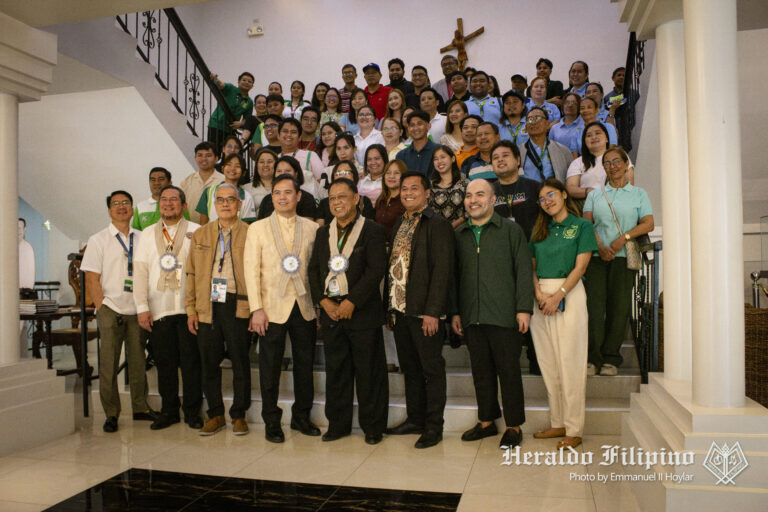
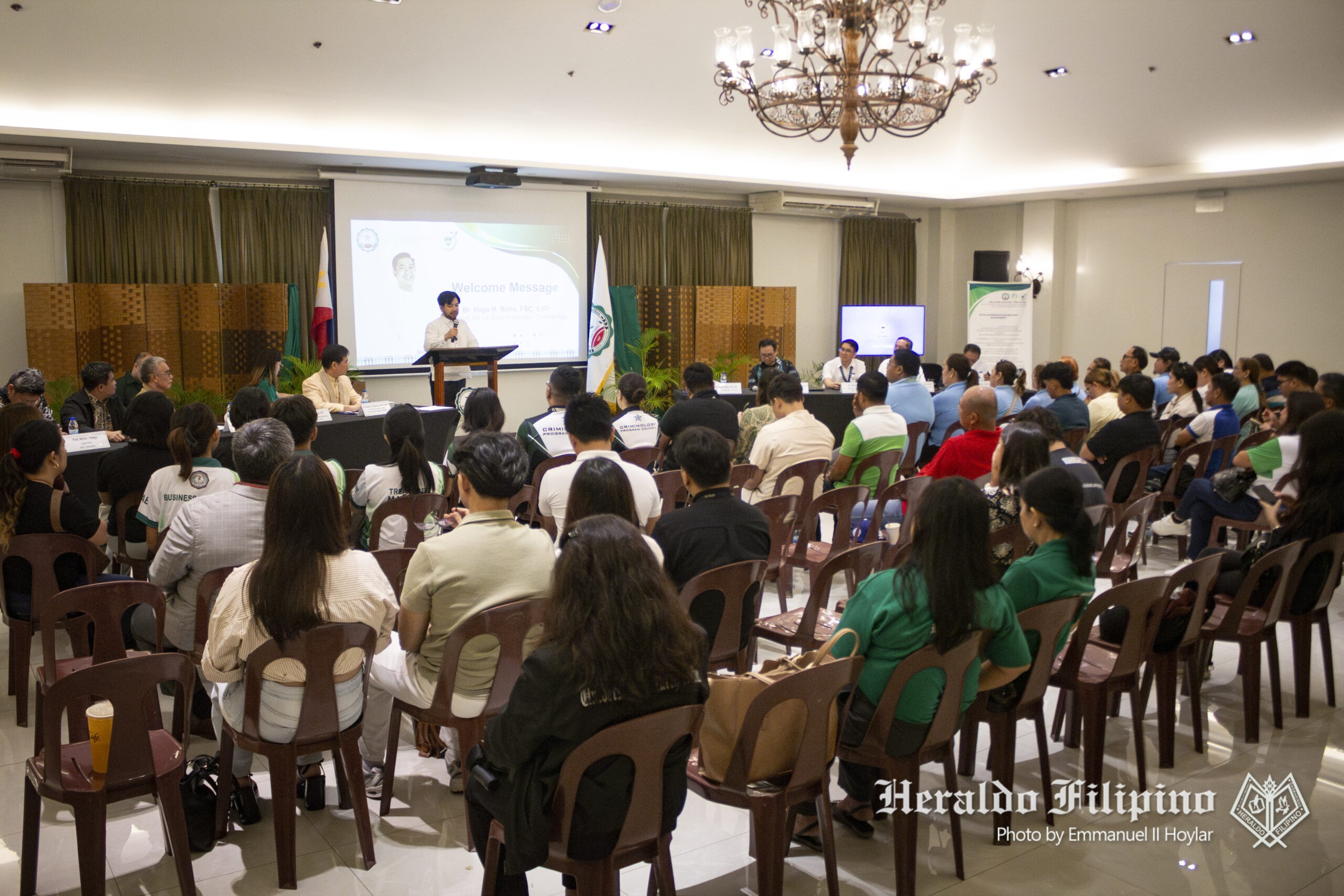
On August 16, the DLSU-D School of Governance, Public Service and Corporate Leadership (SGPSCL) launched the Barangay Governance for Resilient Environment (B-GREEN), a free workshop for barangay officials at the Ayuntamiento De Gonzalez (AdG) Reception Hall. Aimed at strengthening grassroots capacity for environmental resiliency, the event brought together keynote speakers from various government agencies, including the Office of Senator Loren Legarda.
The B-GREEN Training Program
The Barangay Governance for Resilient Environment (B-GREEN) is a 54-hour executive course designed by graduate students of the SGPSCL to strengthen local leaders’ capacity in protecting their communities. Running from September 13 to October 11, 2025, the program will take place every Saturday at the Ayuntamiento De Gonzalez (AdG) Reception Hall, with sessions scheduled from 9:00 AM to 12:00 PM and 1:00 PM to 4:00 PM.
According to Mr. Patrick Pepa, the host and one of the authors of the program, B-GREEN seeks to address critical gaps in environmental protection to curb further degradation. Resilience, he emphasized, begins at the barangay level—the direct link to community engagement and disaster response.
As the program unfolded, the spotlight turned to the environment’s vital role in every community, along with urgent calls for stronger protection against threats to nature. At the center for this advocacy was Senator Loren Legarda, introduced as the esteemed guest of honor and hailed as “the perfect choice” to speak. Recognized as the country’s longest-serving female senator and a steadfast environmental champion, Legarda has built her political career on advancing green governance. Among her landmark contributions is the Climate Change Act of 2009, a pioneering law that integrates climate change mitigation into national policy-making.
In her message, Senator Legarda emphasized, “Ang simula ng pagbabago para sa ating kalikasan ay uusbong sa bawat komunidad na ating kinabibilangan.” The remark reflects the core objective of B-GREEN: while barangays are the smallest units of government, together they form the largest network for implementing environment-related policies. With effective governance and strict enforcement of environmental laws, disaster risks can be reduced and response efforts made more efficient. Legarda expressed hope that the program would inspire barangay officials to put environmental protection at the forefront of their priorities, pledging that if proven successful, her office would work to expand it to universities nationwide.
Collectivism, Environmental Resiliency and Good Governance
Every barangay suffers when disaster strikes, but good governance remains key to mitigating the damages within their communities. This principle of environmental resiliency was underscored during the event. Atty. Izza Mari D. Laurio, Director III of the National Barangay Operations under the Department of the Interior and Local Government (DILG) Central Office, stressed that “protecting the environment is a shared responsibility, not just by the government but to all Filipinos” noting that every effort, no matter how small, contributes to the collective responsibility of families and communities.
Dr. Voltaire S. Guadalupe, Officer-in-Charge (OIC)–Director III of the Department of Health-Center of Health Development (DOH-CHD) CALABARZON, echoed the same collectivist sentiment while recounting his experiences in dealing with the effects of environmental degradation. He quoted that “the environmental crisis is a public health crisis.” During his tenure, he witnessed how natural disasters left hospitals overwhelmed by surging cases of leptospirosis and dengue, often triggered by sewage seeping into households for days or even weeks. He stressed the need for stronger coordination between communities and barangay officials, expressing hope that the B-GREEN program can protect not only the environment but also the public health sector.
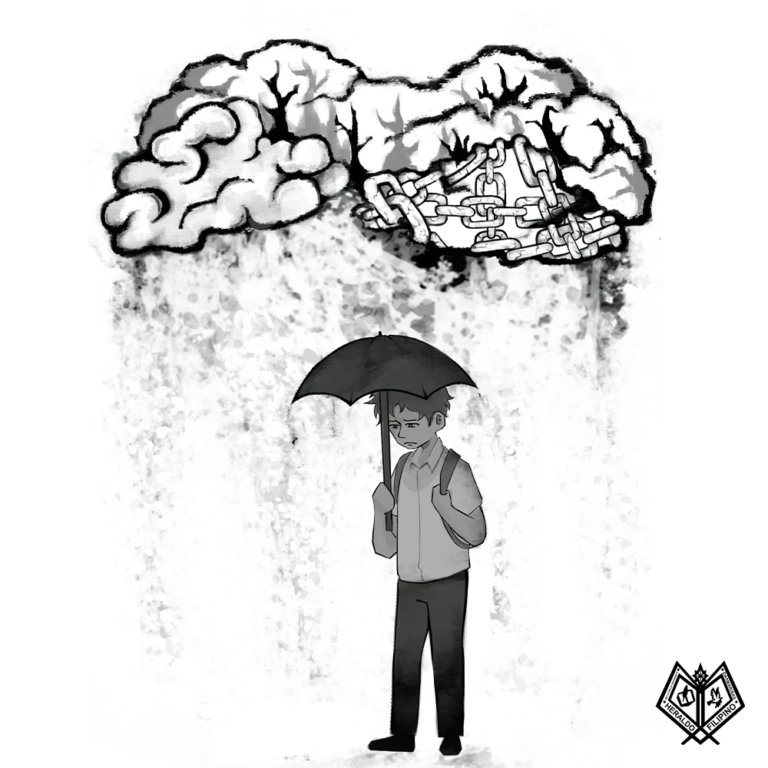
The weather shifts daily, and nature makes its presence known. Some days scorch under blistering heat; others break open with heavy rains and rolling thunderstorms. In the tropics, these extremes form the rhythm of life, the two faces of a single climate. Over time, the land has shaped itself to endure—mountains carved to catch rain, soil absorbing its weight, rivers guiding the water to where it can finally rest.
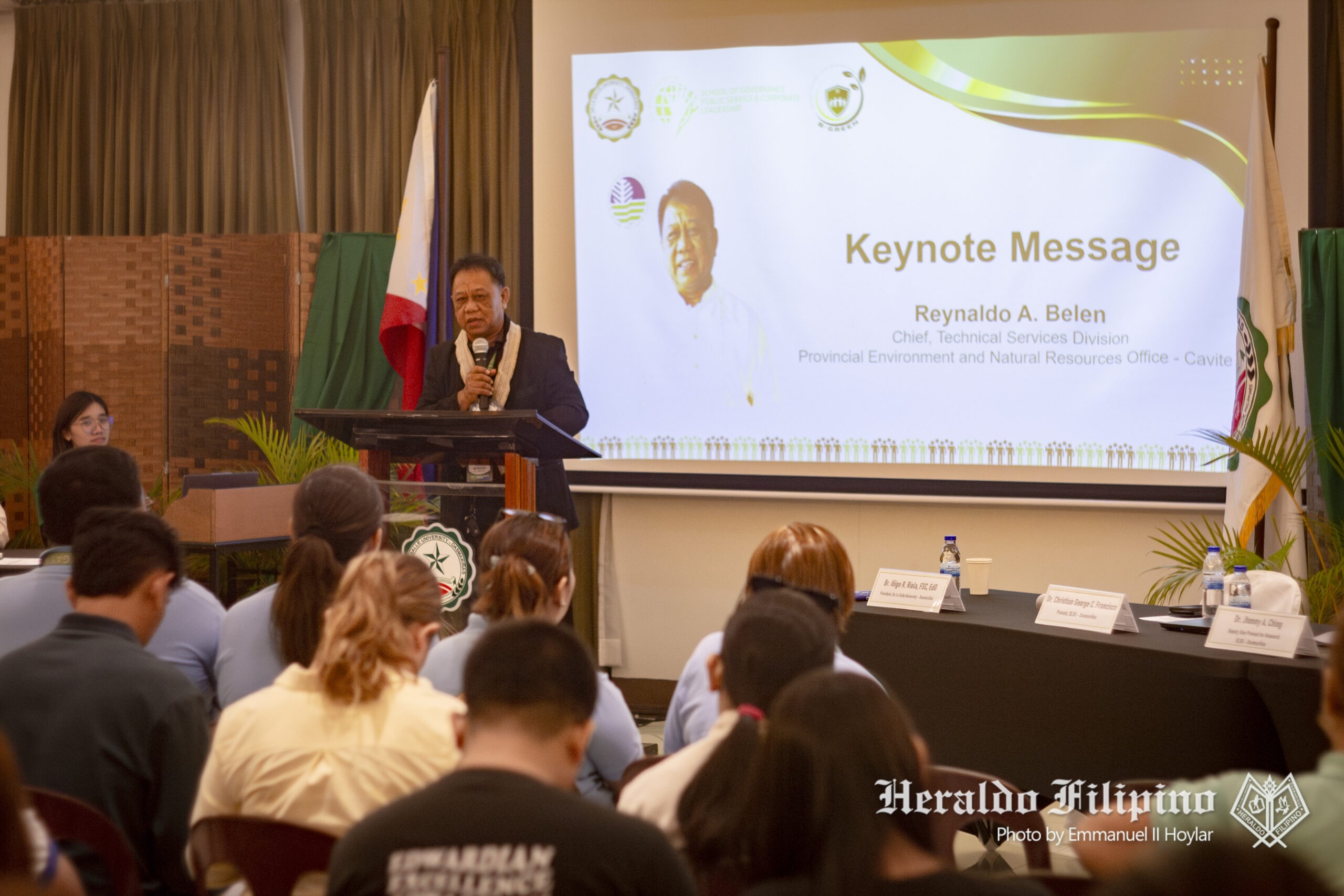
Atty. Reyan Derrick C. Marquez, Chief of the Disaster Risk Reduction (DRR) of the Office of Civil Defense (OCD) in CALABARZON; and Reynaldo A. Belen, Chief of the Technical Services Division of Department of Environment and Natural Resources – Provincial Environment and Natural Resources Office (DENR – PENRO) Cavite, is a witness to this phenomenon. Both speakers pointed out that the majority of the casualties during disasters are due to poorly-built infrastructure, violations of building codes, and outright corruption. They cited houses rising along riverbanks or at the foot of mountains, buildings erected on water streams, and lowland basins—meant to collect runoff from upland areas—being converted into roads or subdivisions. Such practices, they warned, lead to preventable mass casualties, recalling the grim task of retrieving bodies in disaster-hit areas.
To prevent these tragedies, Marquez recommended adopting the Green-Blue Infrastructure Planning, which he explained simply as: “May puno, ‘wag putulin. May tubig, ‘wag tabunan.” Respecting nature and leaving it undisturbed, he said, will reduce casualties and economic loss. Belen, for his part, emphasized that “Protecting the environment is not just a government mandate, but a personal responsibility”, underscoring the need for environmental stewardship, accountability, good governance, and proactive collaboration with local government units (LGUs) in disaster preparedness and environmental conservation. These statements align with the goals of the B-GREEN program, which highlights both good governance and personal responsibility in its scheduled training.
The Practice of Faith, Service and Communion
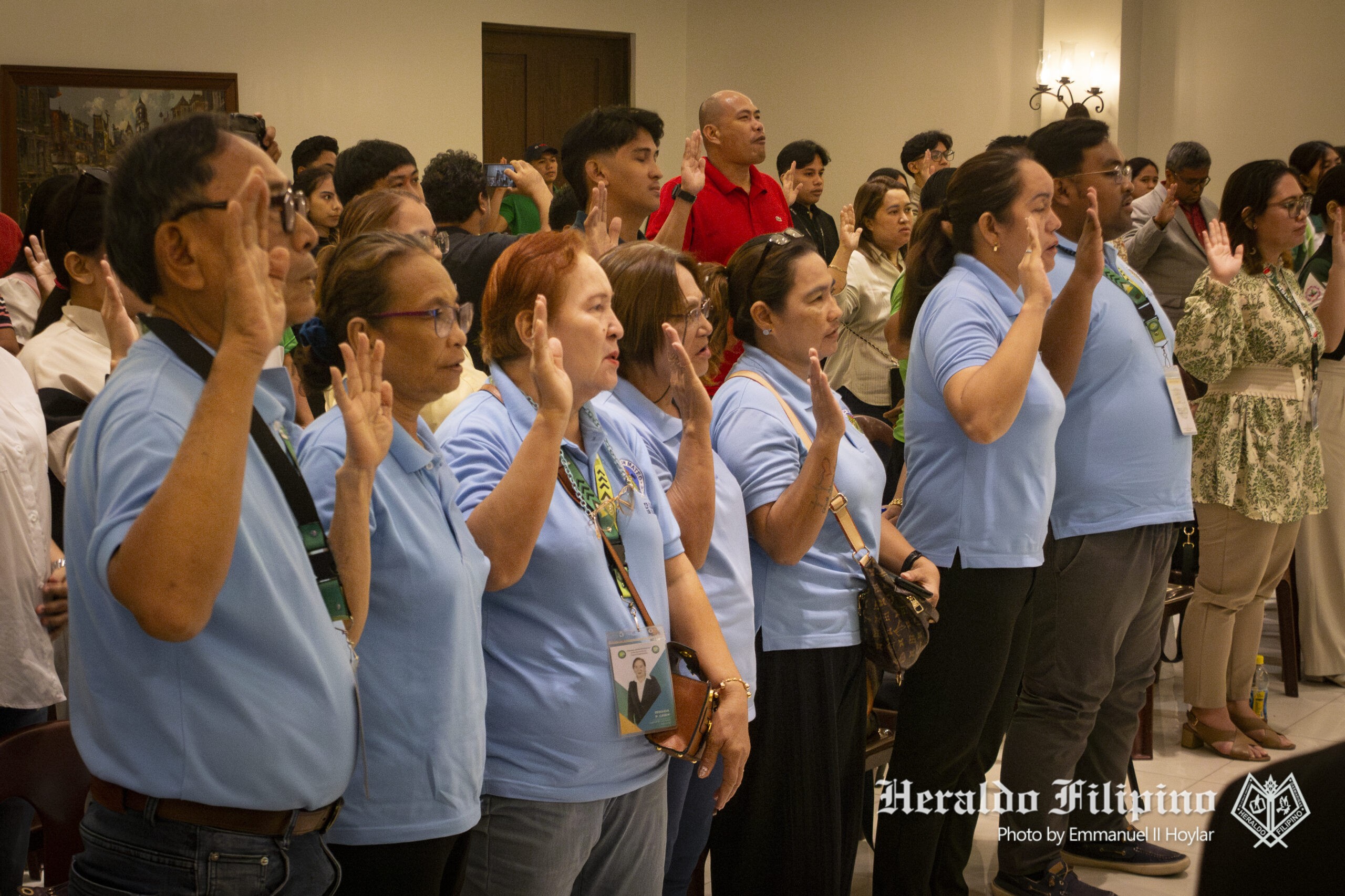
The B-GREEN Program is designed to be a tool of change and aims to engage barangay officials and Sangguniang Kabataan (SK) leaders in becoming proactive leaders that will respect the laws of nature and develop a sense of vanguard in protecting their respective flora and fauna. By serving the community at large, one can instill faith unto themselves and build community rapport, which is needed in acquiring environmental resiliency. In this way, the core values of faith, service, and communion are practiced and made essential for environmental justice.
As the event concluded, guest speakers such as Mr. Marcial Juangco and Mr. Ariel O. Iglesia from DILG Region IV-A, along with DLSU-D Provost Dr. Christian George C. Francisco, delivered messages of support ensuring that their offices would remain open to assist in the program’s implementation. Prof. Marlon Pareja quoted, “We consider this program as a low cost, high impact for the betterment of every barangay” assuring stakeholders that while the program is free of charge, it guarantees a fruitful learning experience.
***
At the heart of B-GREEN is the barangay—the smallest in government, yet the most influential. With good governance, accountability, and collaboration, communities can drive lasting environmental change.


Thank you very much, Heraldo Filipino, for this feature. 😊🙏
Lead the change. B-GREEN! 💚🌿