RECENT PUBLICATIONS |

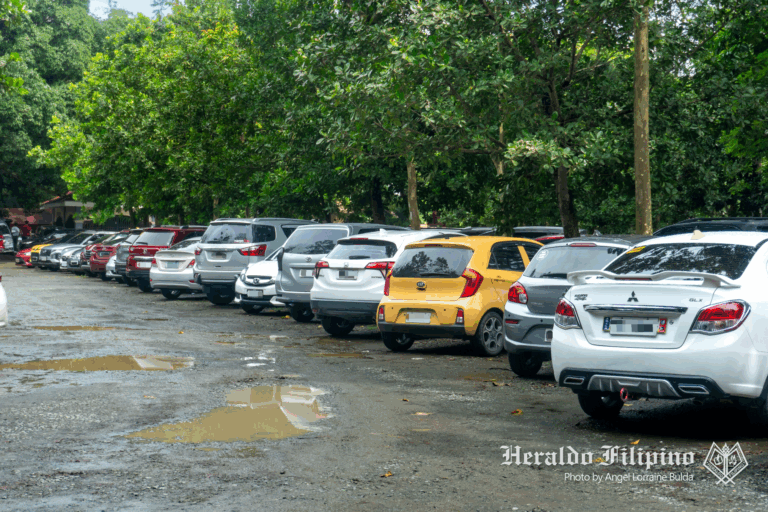
No Parking (Literally)
They said college is where you discover yourself. At DLSU-D, sometimes you literally do—awake before sunrise, rushing out the door with coffee in hand, hoping to reach campus before 6 AM for a parking slot. The day hasn’t even started, yet you’re already stuck—between bumpers, between patience, and panic.
By the time you enter the gates, the race has already begun. Cars inch forward, students weave through narrow gaps, and guards’ whistles pierce through the morning air. You’d think the battle ends once you’re inside—but the real gridlock starts here.
“Ma’am, excuse po—dadaan lang,” a student mutters, squeezing between two idling cars as another shouts, “Late na ‘ko sa quiz!” The sound of engines mixes with hurried footsteps and the shrill of guard whistles, a daily symphony that starts long before the first bell rings.
Outside the campus, students face the usual crawl of jeepneys and tricycles. Inside, it’s the same congestion in a smaller frame: too many vehicles, too few spaces. What used to be a serene, green campus now feels like a living traffic experiment—where patience, time, and space are constantly tested, and “solutions” remain parked on paper.
Cardio 101: Brought to you by campus traffic
At DLSU-D, you don’t need to sign up for a gym membership to break a sweat—just try making it to your 7:00 AM class. What should be a simple walk from the gate to the building has turned into a full-blown workout routine, courtesy of campus congestion.
When cars pile up at the entrance like payday rush on EDSA, many students give up on waiting—not just because of the traffic, but because there’s nowhere left to park. The real gridlock begins after getting inside, where every corner becomes a mini parking hunt. Students circle buildings, peek into narrow slots, and pray one opens up before the first bell rings. Some eventually give up and decide to walk from far-off parking areas or even outside the campus gates. But don’t mistake it for a leisurely stroll under the acacia trees. This is cardio with attitude: dodging bumpers, tiptoeing around puddles, and squeezing into narrow spaces between parked cars—all while hoping your car isn’t being ticketed.
By the time you reach class, your smartwatch thinks you’ve just finished a 5K. Mads, a third-year Psychology student, shared, “I feel like a runner estimating my time [of] arrival just to make it to class at the right moment. The adrenaline rush of walking fast—or running—to arrive exactly on time is the workout.” But this daily sprint says more about the system than the students. Ikot La Salle, the supposed transport fix, remains limited—few routes, unpredictable schedules, small capacity. When walking feels like a marathon and public transport unreliable, driving becomes the default. The result? A campus built for cars instead of the people who walk it.
It’s almost ironic—how a campus that prides itself on being green and student-centered ends up training its students for endurance instead. In light of growing concerns about limited walkable spaces, the University responded by closing the U-Lane to vehicles to prioritize students’ welfare. Yet the move also revealed how deeply cars had already shaped the campus—what was once filled with parked vehicles had to be reclaimed just to give students room to move. Sidewalks now resemble treadmills, detours mimic HIIT sessions, and paths once meant for leisure have turned into shared lanes. Each sprint to class is a quiet reminder of who the campus seems to prioritize—the vehicles that clog its roads, or the students who fill its classrooms.
More miles than modules
You know it’s bad when you’ve memorized the plate numbers of the cars in front of you better than your exam coverage. That 8:30 AM class? You left home at 6:30 AM just to be safe—yet still ended up sneaking in at 8:25, haggard and sweaty. Some students even spend nearly an hour circling inside campus, only to give up and park outside. Mads put it bluntly: “Para saan pa ang car sticker ko, kung sa labas din ako nagbabayad para lang makapag-park?”
The irony stings: tuition fees are meant to pay for education, but what many really learn here is endurance. For commuters, the situation is even harsher. A jeep ride that should take ten minutes stretches to thirty or more during peak hours. Some joke they could have gone home, eaten lunch, and returned—still earlier than cars inching past the gates.
Concerns raised across different student platforms echo the same frustration: “Kahit pa todo taas ng parking at miscellaneous fees, parang wala namang nakikitang improvement kahit kaunti.” It’s a sentiment that resonates across posts and comment sections—a shared exhaustion over paying more yet seeing little change.
It’s a mismatch that raises questions. School is supposed to value every second of learning, yet so much of students’ time ticks away behind the wheel, or squeezed in a lane stuck between cars. No wonder memes about Traffic Psychology and Parking Logistics keep circulating—because for many, that’s where the real practice hours go.
And it isn’t only the students who bear the brunt of the congestion. The daily gridlock also weighs heavily on those tasked to keep order, who find themselves managing not just cars but tempers, routines, and safety risks.
Whistles against the gridlock
For the security guards stationed near the gates, traffic management is now part of the daily grind. What used to be a straightforward job—checking IDs, monitoring entrances—has expanded into directing vehicles, guiding pedestrians, and trying to keep the campus flow intact.
At peak hours, guards can be spotted under the heat, signaling cars to stop or move, whistling for attention, and reminding students and drivers alike: “Sandali lang po” or “Tawid na kayo.” One guard near Gate 3 summed it up: “Ang hirap nga eh, lalo na kapag may mga pasaway o kamoteng drivers.” Their presence helps prevent accidents—and keeps tempers from boiling over.
However, not all encounters are smooth. Some students have voiced concerns across different platforms about inconsistent enforcement—mentioning instances of impolite guards, and even reports of traffic tickets issued for reasons that feel excessive or unclear. These moments, while isolated, reflect a larger frustration: that enforcement sometimes feels arbitrary rather than organized. What should be a system of order occasionally ends up adding to the tension.
Whistles can only do so much. The challenge isn’t just about directing parking—it’s about rethinking how space, access, and accountability are shared within a campus meant to prioritize its students.
Plans that rarely leave the paper
Traffic inside DLSU-D is no exception. Over the years, “proposals” have surfaced: stricter car permits, rerouting schemes, better shuttle services, even talk of building more parking spaces. On paper and in one’s mouth, these ideas seem promising.
But the gap between plan and practice has remained wide. Ideas are often passed around in conversations, and suggestions resurface every semester, yet daily life looks the same. Students still drive in circles, parents still worry about drop-off safety, and guards continue managing familiar choke points.
Students also point out how parking spaces double as waiting areas for parents—car idling for hours before dismissal. Many feel that this worsens congestion and limits access for students who genuinely need to park for classes. It highlights the lack of consistent parking management and enforcement, turning what could be a shared system into a daily contest for space.
One student voiced the frustration plainly: “Mas tumaas lang ang car sticker ngayon, pero wala namang nagbago sa facilities o parking spaces. Pahirapan pa rin.” For many, it feels like paying more for the same old problem.
More than just cars
But while proposals stall, the effects are already spilling over into daily campus life. Campus traffic isn’t only about lost minutes or clogged gates—it’s about the slow drain that seeps into everyone’s routine. Students arrive tired before the first bell rings, professors stall lessons for latecomers, and parents worry about drop-off chaos. Even the guards, who once focused on gate security, now juggle safety, traffic flow, and tempers with nothing but whistles and forbearance.
In August, Sevi—the beloved campus cat—was reportedly run over by a vehicle, sparking discussions among students about just how chaotic the roads have become. What many brushed off as an isolated mishap became a sobering reminder that traffic negligence affects more than convenience—it endangers the life and rhythm of the campus itself.
***
Humor helps soften the frustration—memes circulate, jokes are shared, and everyone laughs about graduating with a double major: one in their chosen program, the other in patience. But underneath the humor lies fatigue.
Because at some point, traffic stops being just “traffic.” It becomes a mirror of priorities: whose time is protected, whose safety matters, and what the institution is willing—or unwilling—to change.
In the end, the issue goes beyond clogged roads—it’s about what kind of campus experience students deserve. The gridlock isn’t just measured in missed opportunities but in patience stretched thin, in mornings spent sweating before lectures even begin. And as they stand under the sun, iced coffee watered down, waiting for the line of cars to move an inch, students can’t help but wonder—maybe this, too, is part of discovering yourself at DLSU-D.

Whoaaa, DLSU-D becomimg gridlock for cars and verbal solutions . This anecdote is as good as their data, I reckon the school admin is somehow lost.