RECENT PUBLICATIONS |

We Took Up Space—Proudly, Boldly, Queerly
Before the music, the glitter, and the defiance of holding hands in public, a question sits in the silent spaces: What does it mean to feel safe enough to be seen?
For Elaiza Oliveros, the USG Secretary of Sexual Orientation, Gender Identity, and Gender Expression (SOGIE) Affairs, the answer came clear: “We wanted students, above all, to be empowered. Empowered to exist out loud. Empowered to feel love, joy, grief, and rage—and know they’re not alone.”
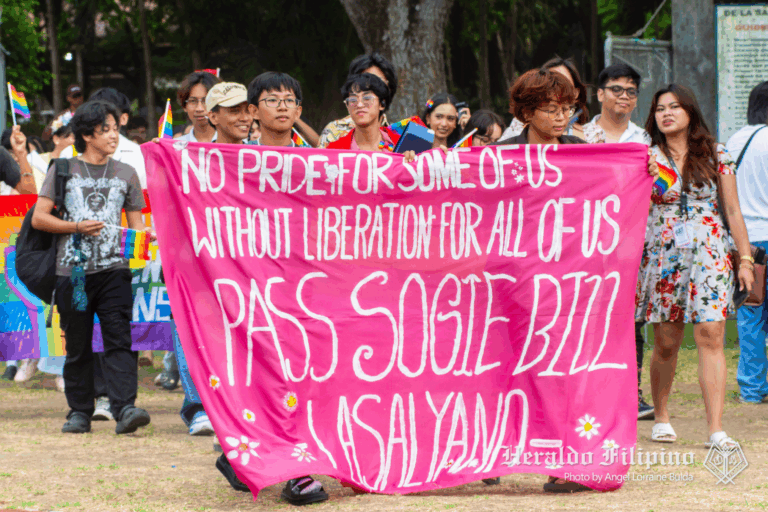
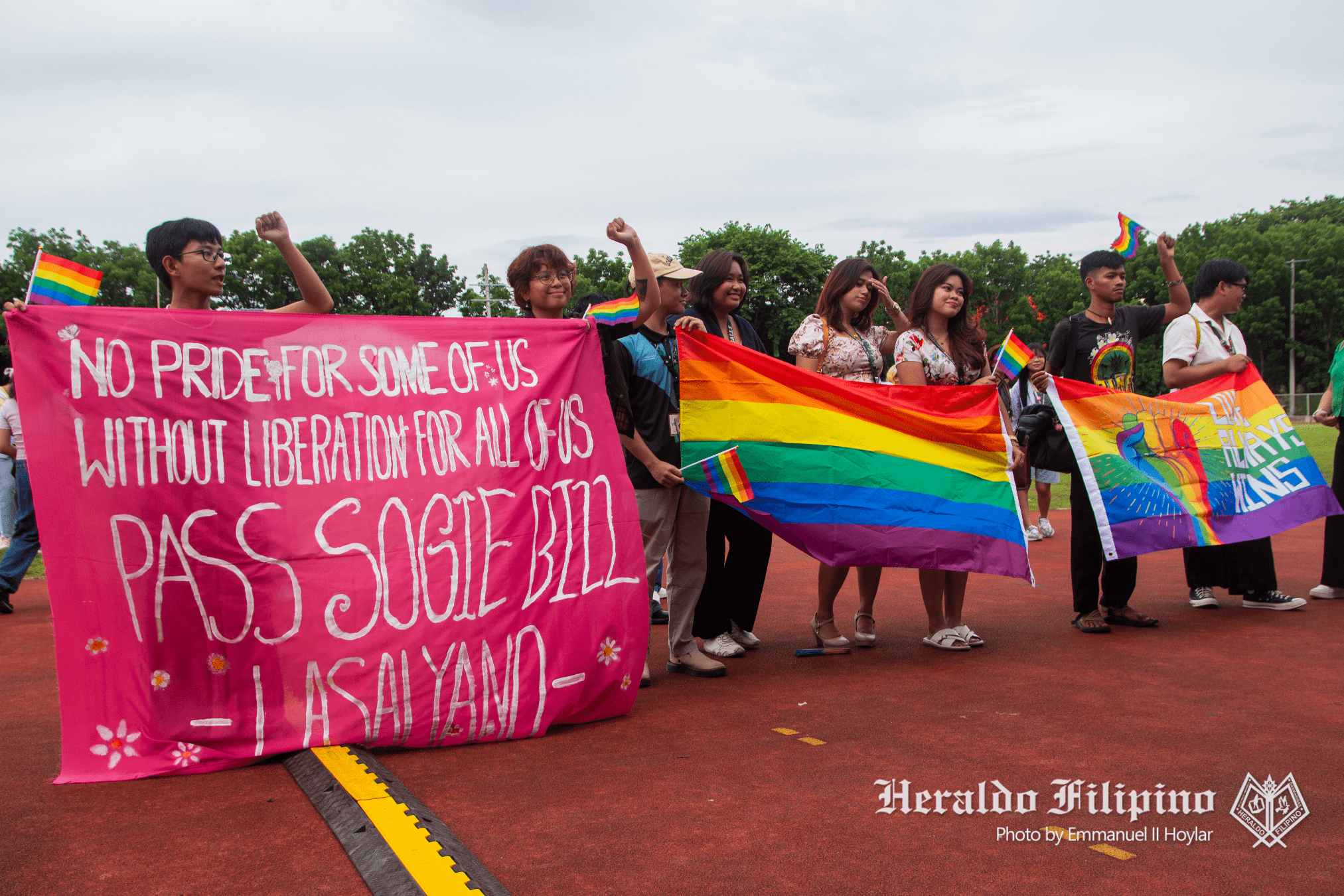
That vision became the beating heart of Animong Bahaghari 2025, where queer students didn’t just show up—they reclaimed space, rewrote the rules, and reminded the campus that Pride is a protest, a celebration, and a community all at once.
However, that empowerment wasn’t handed to them without a hitch. Behind the scenes, the event met pushback: rainbow streamers containing messages of empowerment were discouraged, and students in drag were met with furrowed brows. Still, the organizers persisted. With help from allies within and beyond the institution—the event blossomed into what it was always meant to be: a haven.
“There were a lot of internal battles,” Elaiza admitted. “But when I saw students holding hands, laughing, crying, performing—it hit me. This is why we do it.”
She wasn’t alone in that feeling. Among the crowd stood Patricia Odulio—a psychology student who had spent much of her life waiting for a moment like this: a space where she didn’t have to dilute herself to be accepted.
A space that spoke back
For Patricia, Animong Bahaghari offered something rare: peace.
“I feel safe,” she expressed. “Extra safe and belongingness ‘yung na-feel ko, kasi alam kong gets ako ng mga taong andoon, ‘di nila ako ij-judge based sa identity ko.”
Like many, Patricia had never attended a Pride event before. When she saw that Johnoy Danao—her favorite artist—was performing, she finally said yes; perhaps it was a sign to brave the hesitations and make that first finally happen. But it wasn’t the music that stayed with her the most; it was the silence that surrounded it. “Sobrang payapa ng paligid, habang kumakanta siya. Ibang experience marinig live ‘yung mga paborito mong kanta kasama ‘yung community na kinabibilangan mo, mga taong mahalaga sa ‘yo.”
More than a celebration, Patricia saw the heart of the protest. The speeches from Kabataan Partylist and former House of Representatives (HoR) member Sarah Elago were more than symbolic. They were urgent reminders of the fight still being fought. “Nakita ko kung paano sinubukang itawid ‘yung pagiging protesta ng event,” she said. “Nakikipaglaban pa rin ang community natin para sa pagtanggap, para sa legal na karapatan, para sa pwesto natin sa lipunan.” The experience was deeply personal—a moment of serenity in a world that too often demands masks.
For Patricia, peace comes with protest. But for others, the lines between joy and justice blurred even further—because in a space like this, existing openly was already a form of rebellion.
Between joy and justice
Most attendees agreed: Animong Bahaghari wasn’t just about the glitter or the Instagrammable moments. Behind the color and noise was a deeper truth—it was reclamation. To dance without fear. To wear what affirms you. To speak without diluting your truth. To exist—fully and visibly—in a campus where silence is often the safest default.
“Nagprotesta kami about this because we must and we can,” one student said. “Dahil karamihan sa amin ay lumaking kailangang magkubli, thinking we can’t do anything about our gender.”
In his voice was the weight of years of being told to tone it down. That day, students in colorful makeup, chest binders, or simple outfits sitting quietly on the grass were reclaiming the space denied to them. Because when you’re queer in a conservative place, presence itself is political.
There were no barricades, no hush-hush warnings, no lectures. No one was watching their backs. They were watching each other glow.
And while some danced unapologetically in platform boots, others found a kind of revolution in stillness—in simply being. For every bold outfit and flamboyant pose, there was also a quiet queer student who had never dared show up in public before. That attendance was its own protest.
“Marami pa ring homophobia na nagm-manifest sa campus natin, lalong-lalo na when it comes to repressive policies,” Patricia admitted. “Pero at least sa event na ‘to, kahit ilang oras lang—minsan sa isang taon—pwede kaming maging kung sino talaga kami without [the] fear of judgement.”
It wasn’t an exaggeration. Several students, while thrilled by the event, whispered about feeling unsure whether such visibility would draw backlash. Others hesitated to post about the event, uncertain how it might be received.
At a University grounded in values shaped by faith, queer identity still navigates tightrope spaces. A wrong word, a suggestive gesture, a pride pin worn in the wrong classroom—any of these can invite stares or silence. Animong Bahaghari dared to push back against that silence. It wasn’t just a show. It was a soft revolution—where joy became resistance, and stillness held power. And that joy didn’t mean erasing the fight.
“This is why Pride will never be just a celebration,” Oliveros added. “Because we’re still fighting for the right to celebrate in the first place.”
In between the shimmer and the speeches was a truth that anchored the whole event: Joy is not the opposite of protest. And while protest shaped the pulse of the event, Pride had room for tenderness, too. Some found healing in the noise. Others, in unexpected quiet.
Where protest meets serendipity
For many, Animong Bahaghari was resistance in full color—a chance to be seen, to celebrate queer joy, and to speak truth to pain. But for some, it became something more personal: the backdrop to a life quietly shifting.
Aedrei Cabras, a bisexual student leader, had grown used to love slipping through her fingers. Her history with romantic relationships had been defined by hesitation, unreciprocated feelings, and the kind of silence that lingers even after the conversations end. She had grown used to love being fleeting—one-sided, ignored, or quietly dismissed. And so, she learned to fear commitment, shielding her heart even as it longed to be seen.
But this time felt unusual.
She had been talking to someone online—someone who slowly, gently, began to matter. Still, she wasn’t planning to make a moment out of it. She thought she’d stay guarded. Just show up. Just meet.
But something from the event somehow changed the air. “My first encounter with this person was both strange and ironic,” Aedrei shared. “I hadn’t even planned on going to my school’s Pride event, much less meeting someone who would leave such a mark. But from the moment we met, everything just felt natural—like we’d known each other for a long time. And even though it was too soon to tell, it already felt like loving this person would come easily.”
It wasn’t loud or performative. It wasn’t a declaration to the world. It was something internal, fragile, and deep. Something whispered: This one is different.
In that moment—amid the rainbow flags and soft city lights, surrounded by peers dancing and protesting and hoping—Aedrei felt something settle. A quiet resolve. Maybe for the first time in years, she was ready. Not to be certain, but to take a risk.
Sometimes, Pride doesn’t just empower who you are—it softens who you’ve had to be. The guarded, cautious version of yourself built from years of rejection begins to loosen. Even for a night, you let yourself want. You let yourself believe.
As Elaiza stated, “Society has shunned us enough and discriminated against us; let’s spare ourselves from self-inflicted hatred, dahil walang mali sa ikaw.” In her statement, she advocates for every LGBTQ+ member to resist, to push forth the barrier, and take up the space. “I hope we see and feel the love and acceptance we deserve.”
***
As the music faded and the last flag was folded, Animong Bahaghari 2025 left more than glitter on the grass. It left a feeling. It lingered in the soft smiles exchanged between strangers, in the quiet courage of those who showed up for the first time, in the group photos, the shared stories, and the promises of “next year ulit.” Even after the Track Oval emptied, the spirit of Pride lingered—in hearts a little braver, in friendships a little stronger, and in a campus a little kinder. Because at its core, Pride wasn’t just what happened on May 27. It was the way we took up space and finally felt like we belonged.