RECENT PUBLICATIONS |

Lines of Power, Paths of Privilege
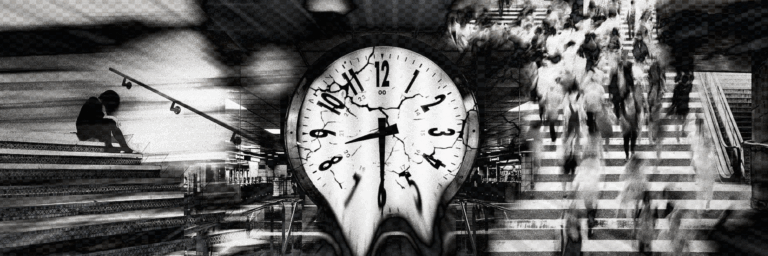
We’ve all stood in line—sometimes for meals, other times for chances, often just to be seen. But not all lines stretch the same, and not all of us bear the weight equally. In a world where privilege finds the fast lane and overhauls the marginalized, the queue becomes more than just a line—it becomes a mirror. For some, it’s a momentary pause; for others, it’s a daily act of endurance—rising before the sun to catch a bus, waiting endless hours in hospital halls, or hoping to be noticed in a system that rarely looks back.
When order masks injustice
In this country, fairness is a queue where not everyone starts at the same point. On paper, Queueing Theory—that neat slice of logic promising order in the chaos of lines—makes perfect sense. It claims that if you arrive early, you’ll be served early; that the system will flow seamlessly if everyone waits for their turn. This formula governs traffic lights, fast food counters, and waiting rooms. It hums in the background, whispering that fairness is built into the rules.
However, the world isn’t made of paper. People don’t stand on equal ground when they step into line. Others arrive early and still leave last—unseen, unheard, folded into the margins the system forgot.
Lines that don’t move
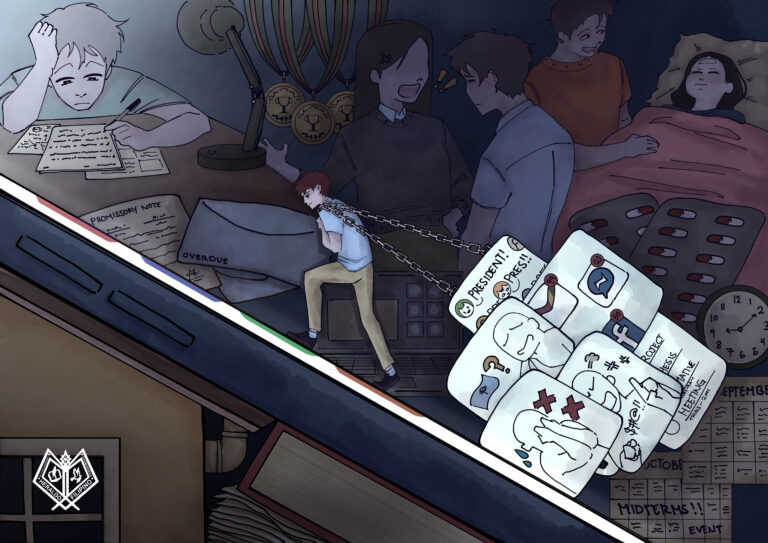
Axel knows this by heart. She’s a student whose life is a constant act of balancing—organization meetings, academic deadlines, family duties, and the quiet battles in between. Her time doesn’t move in hours—it ticks by in tasks, in tabs left open, and chats she has yet to reply to.
Amid the motion, one thing always stops her: the line. It shows up everywhere. At the university registrar’s office, which opens too late and closes too early, forcing students like Axel to squeeze between classes or skip meals just to get a slot. In the slow crawl of permit approvals for student organizations, Axel, a scholarship student and an officer, constantly waits on signatures that move at the pace of university red tape.
She doesn’t come from money, and she doesn’t have the privilege of shortcuts. She’s the kind of student who saves every peso allowance and attends online meetings while doing household chores in the background. For her, every delay has a cost. These lines, these hours spent in waiting, aren’t just minor inconveniences. They’re quiet, daily reminders of a system that keeps people like her in limbo. Axel doesn’t wait because she trusts the process; she waits because she has no other choice. Because for students like her, skipping the line isn’t an option. Surviving it is the only way through.
Skipping the line, buying the privilege
We live in a world where time bends depending on how much you can pay for it. Fast passes, express lanes, private consultations—systems dressed up as convenience but stitched together by inequality. They sell the illusion of efficiency, but we all know the truth: privilege doesn’t wait in line.
Axel’s story wasn’t an isolated one. It echoed quietly in others who have long felt the weight of an uneven system. During a discussion in their Ethics class, the topic turned to fairness. A classmate pointed out—“‘Yung mga may pera or koneksyon, puwedeng kahit kailan umabante. But the others, lalo na ang mahihirap, why do they have to endure?”
When the line becomes a lifeline
One morning, Axel’s world stood still. They rushed her grandmother to the hospital after she had collapsed, but even before the sun had fully risen, the line was already there, winding down the hospital’s hallway, heavy with silence and stories no one had time to hear.
People weren’t just waiting for medicine, they were waiting for their welfare to matter. Axel sat there, hands wrapped around her grandmother’s, watching the seconds. Six hours passed before they saw a doctor. Six hours of worry—of whispered prayers, of watching every breath like it might be the last.
She missed a presentation that day. A quiz. A meeting. But how do you weigh deadlines against the quiet dread of losing someone you love? Somewhere in a government file, the numbers are clear: a 2022 report from the Philippine Institute for Development Studies (PIDS) revealed that many provinces fall below the already grim national average of 0.5 hospital beds per 1,000 people. Moreover, in 2023, Statista reported that there was approximately one doctor for every 25,280 people in the country—a haunting reminder of how stretched healthcare has become. But what do these numbers truly mean when you’re sitting on a cracked bench, holding your grandmother’s wrist, and counting her pulse? For Axel, they weren’t statistics. They were the echo of names being called—never hers. They were proof that this wasn’t just a bad day. It was a broken system—one that made her wait not just for care, but for a system that may never catch up.
Axel didn’t complain. She simply stayed. Because sometimes, the bravest thing you can do is stand beside someone you love in a place that forgets people like you.
The backdoor advantage
But not all waiting rooms are created equal. There’s also a line you can’t always see—the one paved by names whispered in offices, through favors quietly exchanged. Sometimes, all it takes is a message sent or a surname mentioned, and suddenly the wait disappears. Connections that you don’t have, they say. For the rest, there’s patience, and a bitter hope that time will be kind.
Axel has learned this the hard way. She’s the type who’ll wait three hours outside an admin office just to get a signature, while others walk in and out with a nod from someone behind the desk. She once spent an entire afternoon bouncing between buildings to get her grandmother’s referral approved, only to overhear another student—one with a family friend in the clinic—get the same form signed in ten minutes. No questions asked.
***
This isn’t just about queues. It’s about who gets to move forward in life without resistance and who has to wait. It’s about what we normalize and how we forget that behind every person in line is a story, a need, a dream. Some will say waiting builds character. Maybe. But it should never be the cost of dignity, health, or opportunity.
In this country, the line isn’t straight. It bends and twists around names, faces, and zip codes. Some are born at the front, guided by invisible hands. While others are born at the back, told to wait and gamble for a chance that might never come through. And perhaps, it’s high time to stop standing in line and adhere to a system that will never care about you. The question begs and awakens—what happens when we stop waiting and demand a way through?
Art slider by Angienette Laurza
Originally published in Heraldo Filipino Volume 39, Issue 2