RECENT PUBLICATIONS |

Revelations of the Cosmos: OBRA 21
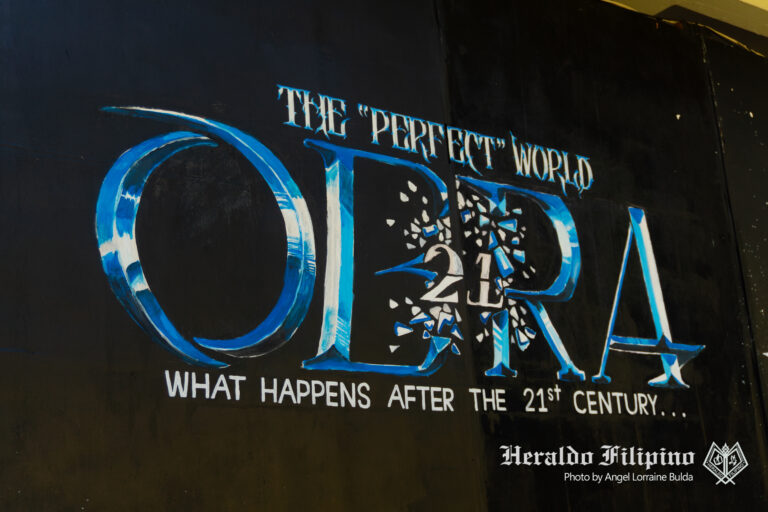
Celestial bodies and sweeping constellations amidst a black sky tear across the facade of Gregoria Montoya Hall (GMH)—a cosmic rip in the fabric of time titled OBRA 21.
Marking the start of Students’ Week 2025, the Visual and Performing Arts Production Unit (VPAPU) held the grand opening of its annual week-long art exhibit, OBRA 21: The “Perfect” World, on November 12.
This year’s exhibit explores the theme, “What happens after the 21st Century,” taking the viewer on a journey through three imagined futures—the desolate earth, the “perfect” earth, and the imaginarium. Each section asks a single, unsettling question: which will be our fate?
The depths of the abyss
Stepping past the curtains, we are immediately thrust into the darkness of the first section—the desolate earth. A blood-red light casts an ominous glow overhead, painting the space in a suffocating atmosphere. Anchoring the center of these dreary panels is In Caelis Ruina by Brian, showcasing towers dripping with blood from their peaks. Its Latin title, meaning “ruin in the heavens,” nods to the Tower of Babel—humanity’s age-old ambition to reach beyond what it can bear. It serves as a grim reminder that in our pursuit to leave a mark, we leave only the remnants of our arrogance, forcing us to realize the limitations of our flesh and the desolation left behind by our meager imitation of the divine.
Situated adjacent to it is a tarot card interpretation entitled The Greedy by Amber. It depicts a sea of wine pouring from chalices held by angels. The composition features unblinking eyes—likened to those of a crocodile—watching silently as indulgence drowns what remains of the world. The card has been dealt, and its orientation suggests this is not mere prediction or warning—it is happening.
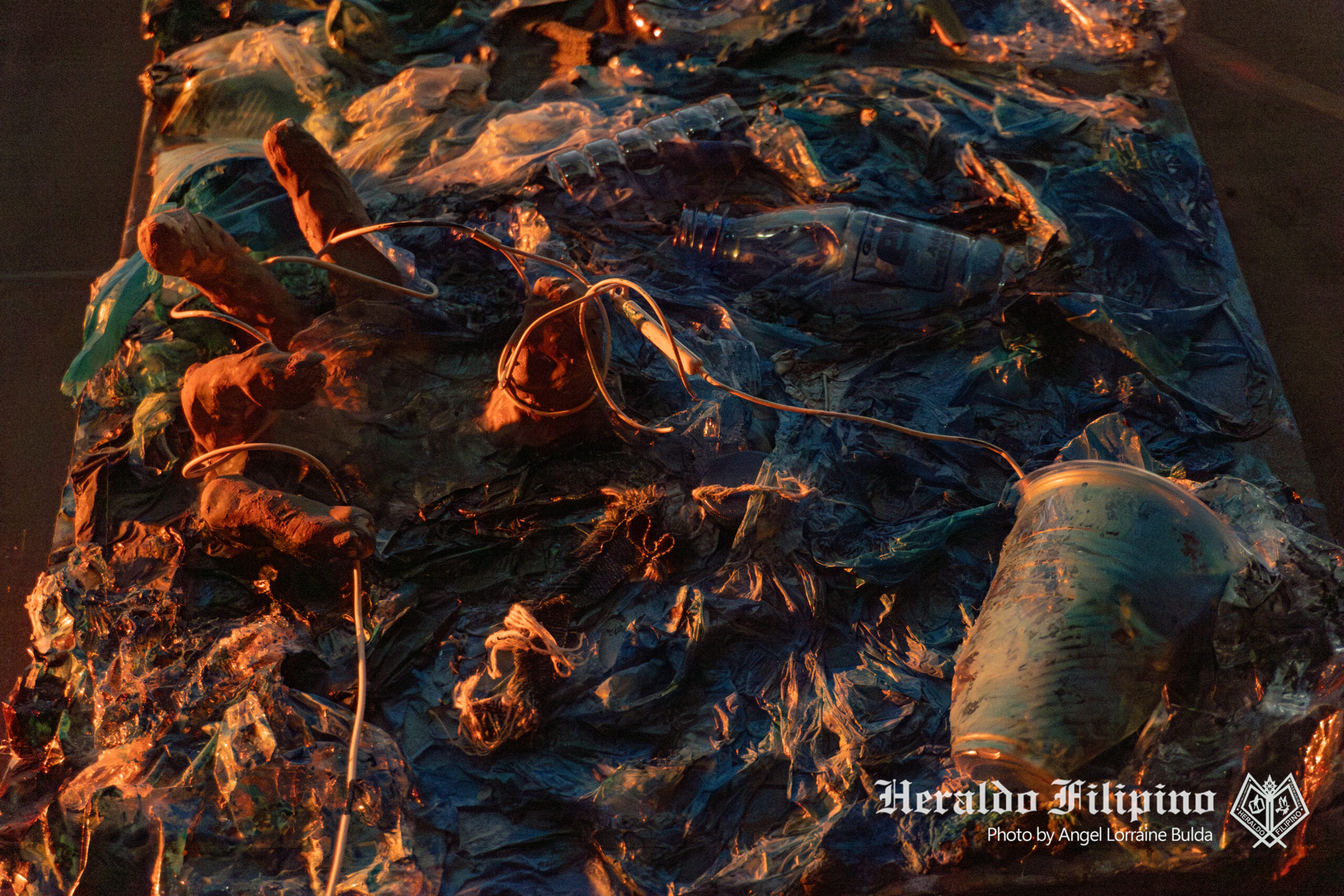
Venturing deeper into the darkness, the earth is sinking by Senescene strikes the viewer with an image of a world overflowing with the mass of waste we produce. Plastic cups and bags pile atop one another as a hand reaches out, desperate to surface from the garbage that has replaced the oceans. Tangled in the hand’s fingers are wired earphones, symbolizing the trap we have built with our own creations, swallowing us—and the world—whole.

Let there be light
Emerging from the solemnity of the desolate earth, we step into the section of the “perfect earth.” White walls greet us with brightness; colorful artworks pull us in with warmth. It feels like a brief breath after the suffocating imagery—a temporary respite that offers a fragile, fleeting hope for what could be. Hanging on the bright panels are various portrayals of an ideal world, showing not only diversity in perception, but the endless possibilities of our future. Yet even in this glow, the vision of the perfect world remains indistinct.
Is perfection the lush greens of nature’s triumph against our structures—a reclamation of the earth we arrogantly claimed as ours? In The Perfect Rebirth by Bianca Mangahas, humanity’s constructions serve merely as the foundation for a new biome, an oasis grown among the towering arches and domes of our making.
Or is perfection found when nature and technology learn to coexist? In this version, neither dominates the other as humanity continues to progress. In HC’s Arc of Becoming, a child is perched on a swing tied to a tree, while a glimpse of technological advancement looms in the background, suggesting a harmony between the natural and the man-made.
Perhaps the perfect earth is simply the fluttering wings of a butterfly over the tides—a peaceful vision of life continuing as it was. Whispers Upon the Tide, by Bri depicts the serenity derived from the balance of life, the perfection found in the whisper of a butterfly’s delicate wings above the ripple of calm waters.
Beyond black and white; bad and good
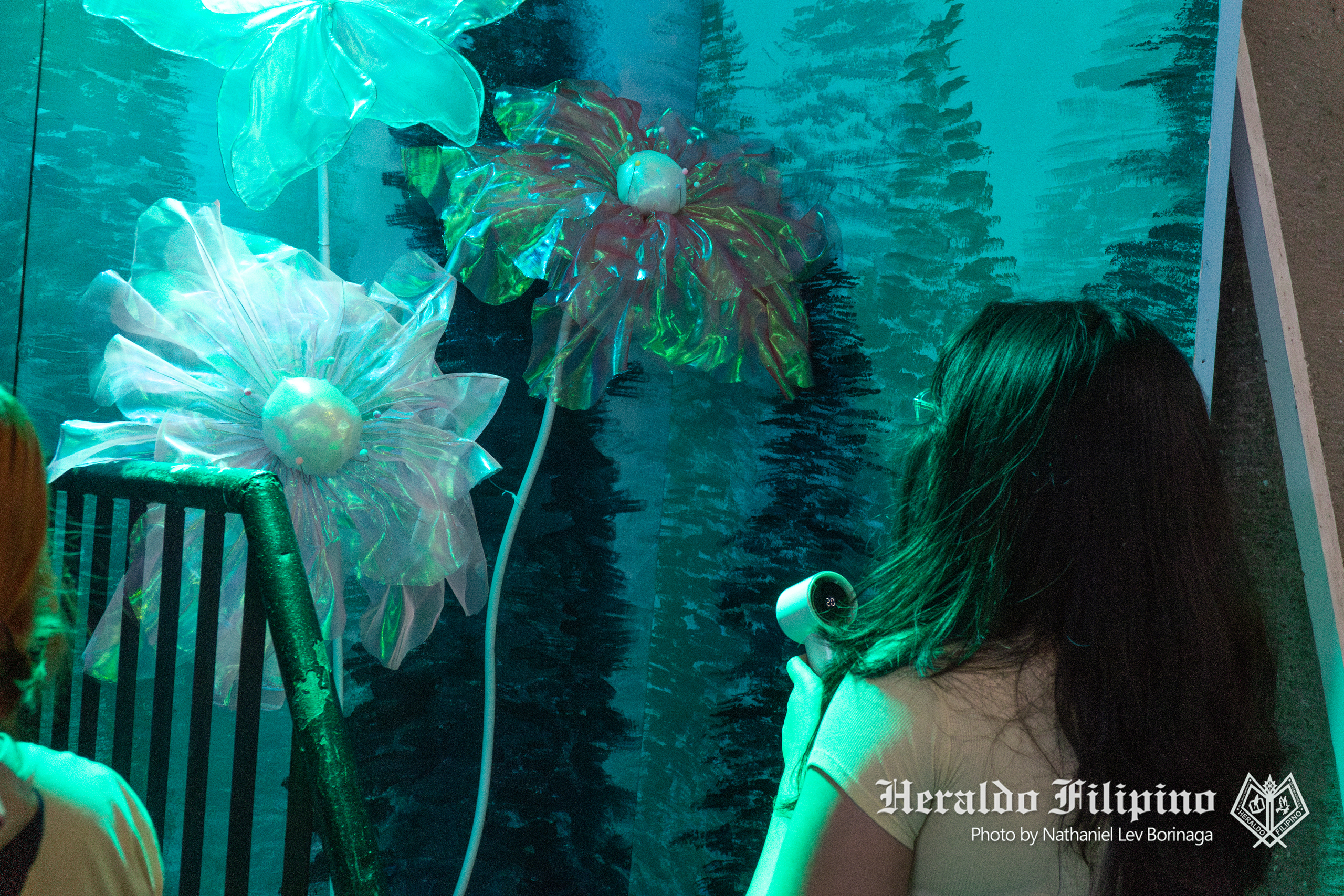
Beyond the barren and the ideal lies a separate realm of possibility. As we wander into what resembles a vast mythical forest, we enter the third and final section of the gallery: the imaginarium. Here, the boundaries of reality begin to blur and the world bends to the will of imagination.
In a three-part visual series by Ean and Xilentred, To The Imaginarium depicts the journey of stepping into this wonderland and the self-discovery that accompanies it. Layered elements and ethereal effects simulate the sensation of crossing a threshold—of being momentarily suspended in a place where reality is willingly traded for creativity that stretches beyond the edges of the skies.
But what happens when the ability to perceive reality is lost to imagination? In aive.seals’s Blinding and Reality, a single light source glows behind a canvas, revealing the silhouette of a man suspended in empty space. There is no portal to another realm; rather, reality itself is lost to belief. The work shows how perception can be clouded by the desire to materialize the imagined until, ultimately, reality can no longer be perceived.
***
OBRA 21 is more than a mere space for reflection or a means to contemplate the state of the world—it is a mirror to our darkest fears and deepest desires. It gives a name to what was once only felt, neither spoken nor realized. It pushes us not just to ponder but to act.
In the worlds laid before us, which Earth will we choose?