RECENT PUBLICATIONS |


De La So Long
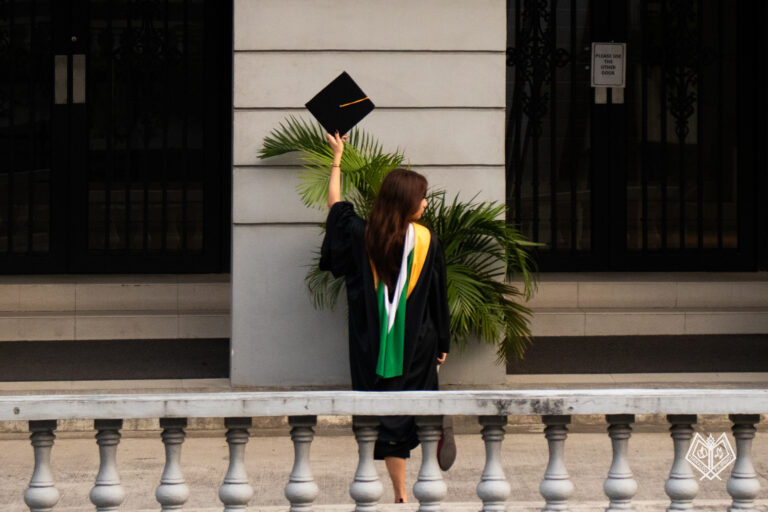
By the time we graduate from our University and cross the stage, you and I will have handed over nearly half a million pesos to an institution that bears the historic distinction of losing its autonomous status after fifteen years.
That first paragraph alone already kicked into gear a few defensive protocols. Some readers will roll their eyes. Certain administrators will click their tongues and dismiss this piece right off the bat. Alumni will likely flock to the comments section, preaching the gospel of “Pasalamat ka na lang kaya.”
But let’s have a serious conversation, away from ego and emotional attachments. It is precisely this culture of toxic gratitude and the lack of self-critical assessment that has led to where De La Salle University – Dasmariñas (DLSU-D) finds itself today.
Silence is not loyalty, and criticism is not hate. Make no mistake: I want to be proud of my University.
This University has been present in Dasmariñas City for decades, but now there is very real competition on the horizon in the form of a new University of the Philippines (UP) campus rising in the same city, while an Ateneo campus is set to open just under 30 minutes away.
We should encourage more dialogue between students and the administration beyond mere feedback forms. The concerns are plentiful but rarely discussed constructively. Our research output remains low. Board examination results, barring notable exceptions such as the College of Education (COEd) performance in the Licensure Examination for Professional Teachers (LEPT), have likewise left much to be desired. Several programs continue to post passing rates below the national average.
This was seen in the March 2026 Civil Engineering Licensure Examination (CELE), where DLSU-D recorded a 33.02 percent passing rate. This marked an improvement from its previous performance, yet still fell short of the national passing rate of 35.05 percent.
When The HERALDO FILIPINO publishes these, instead of getting messages asking why the results turned out the way they did, we often receive messages from alumni and administrators urging us to be more positive and “considerate” of the University’s public image. All this while our physical facilities are jarringly subpar, leaks in our office destroy our archives, and rats infest entire buildings.
We are paying premium prices for substandard results. Even within some of the strongest programs on campus—like my own Political Science course—the lack of institutional consistency and field-based application limits what students can achieve.
We need consistency, not piecemeal concessions. Consistency in both action and messaging. We need consistency in courses that deserve professors who treat teaching as more than just a sideline, and a University Student Government (USG) that cares more about tangible outcomes for students rather than internal politicking. We deserve something more than just a few new “bahay kubos” scattered across the grass and a Buildings and Facilities Maintenance Office (BFMO) that barely seems to manage.
Let us acknowledge that the La Salle name brought a regional monopoly on prestige that we can no longer take for granted—certainly not with Cavite developing rapidly.
To the west of Cavite, Ateneo de Manila University has formalized its entry into the province, partnering with GT Capital to build a massive 15-hectare campus inside General Trias’s Riverpark Township—a partnership intended to help develop an innovative urban area for education. On the other hand, here in Dasmariñas, UP has partnered with Vista Land to erect the UP Technology Innovation Campus within Vista City’s University Town.
Added to this is the fact that the Lyceum of the Philippines University – Cavite (LPU-Cavite) has comfortably secured its own autonomous status, while De La Salle Medical and Health Sciences Institute (DLSMHSI)—literally just down the road—remains firmly above us in the eyes of the Commission on Higher Education (CHED) with its deregulated standing.
The point is not to compare or degrade institutions of higher learning. It is to understand that the reality is shifting, and that we are no longer the default choice for excellence. From this angle, former University President Francisco “Sockie” de la Rosa’s “Autonomous Recovery Plan” reads more of a life-preservation plan. We cannot cling to a past prestige that we simply do not possess. The administration’s own efforts to recover autonomous status suggest that they, too, recognize the need for change.
These institutional shortcomings leave the student body riddled with genuine anxiety, wondering how future employers will view a diploma from this University. Some students increasingly wonder if our half-a-million-peso degree will still hold the weight it promised when we first applied.
It’s time to recognize that prestige should be something we must constantly prove in the present, not just inherit from the past.
Originally published in Heraldo Filipino Volume 40, Issue 2