RECENT PUBLICATIONS |


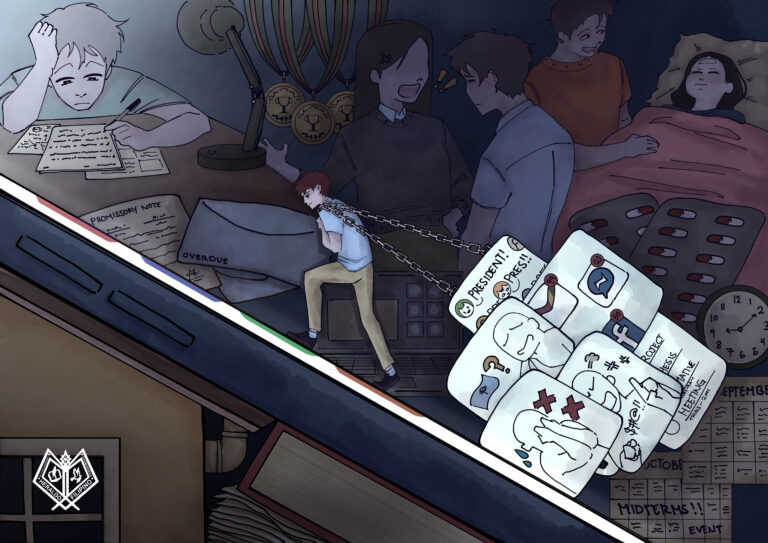
The Low that Comes with the Climb
We can all relate to that drive to go on a journey of improvement: wanting to get better at an instrument, aiming for higher grades, or refining one’s craft. At first, there is nothing but expectations of smooth sailing—but reality is more complex. It can feel uncomfortable, awkward, even painful before you see even an inch of progress. And many fail to understand why this happens, ultimately blaming themselves instead of realizing that discomfort is often part of growth.
When getting better feels like falling apart
Getting better does not always feel like progress. Sometimes, it feels like the opposite—the act of trying to dig yourself out of a hole, only to find you have dug yourself deeper. You reach for improvement, but the ground you thought you were standing on collapses, revealing something that was hidden underneath. What surfaces is messy, disorienting, and nothing like what progress is supposed to look like.
This is the low that comes with the climb. It is not rock bottom, but a disorienting dip that happens precisely because you are doing the work. It is the feeling of being farther from the top than when you started, even though you have not stopped moving.
The process of improving
It always starts with a decision—the decision to change, to do the work, face the thing, and move toward a necessary unraveling. It is the unwanted chaos that comes, almost inevitably, from deciding to move forward, forcing everything hidden in the dark into the open.
This sinking feeling is not merely anecdotal. It shows up in the most important moments of growth, like when an artist, suddenly surrounded by people more skilled than them, can barely recognize their own improvement anymore.
“It was a bad feeling,” Carl, a second-year Multimedia Arts student, recalls, “but it was just a passing feeling.”
Carl’s experience reflects a pattern that extends beyond art and learning. Being exposed to something greater did not erase the progress he had made; it only made that progress harder to recognize for a while.
This feeling is not unique to artists or students. Sigmund Freud observed something similar as early as 1923, noting a strange phenomenon in which patients unexpectedly worsened after experiencing therapeutic success. He called it the “negative therapeutic reaction”—a state where progress and pain arrive together. While several factors attempt to explain why this occurs, the general consensus points toward an internal struggle with the self.
Either way, the pattern remains.
“We always have that time of self-doubt,” Carl notes. “But people are different. People grow at different rates.”
The feeling of falling behind is often less a fact than a momentary perception—the thoughts of someone who has not yet looked back and recognized how far they have come. Growth often requires passing through uncertainty before progress becomes visible.
Self-destruction for self-improvement
The act of reshaping one’s identity is far from easy. The uncomfortable reality people must face is that growth often requires letting go of old versions of themselves. Achieving this evolution involves taking who you are now and examining it piece by piece. To learn, you must admit what you do not know and identify what needs improving. In many ways, it becomes a psychological dissection of the self.
To learn new things and become wiser, you must realize there was a time when you did not know better. To truly become capable, you must accept the reality of your limitations. While this may seem self-deprecating at first glance, it is a necessary step in self-improvement. Knowing your weaknesses allows you to build your strengths, and recognizing your strengths often begins with acknowledging where you once fell short.
The cutting shards of a once-beautiful vase
People who seem like they have everything figured out did not arrive there seamlessly. It takes a painful, exhausting amount of effort to put everything together; such is the hidden origin of anything beautiful. Everything deemed perfect was once a mess in the making. Everyone sees the masterpiece, but almost no one sees the difficult process required to create it.
This is true for both physical and metaphorical pursuits. The person who spends countless hours in the gym, repeatedly pushing their body to its limits; the student who studies for days at a time, wrestling with concepts that seem impossible to grasp—these struggles rarely appear in the finished product. They are the gritty foundations of an ideal self, rarely revisited or shown to the world.
***
The outcome is always what catches the spotlight, but the shadow holds the truth. It is found in the shards that had to be gathered before something whole could emerge again, and in the steep climb hidden behind every peak. It lives in that awkward, unrecognizable middle point that feels so far from the finish line.
This middle point is never the end of the story. The dip was always part of the climb. And the people who come out the other side are proof that the breakdown was never just destruction. It was the spark that cleared the dead wood, making room for what comes next.
Art Slider by Rae Allenson Esteban
Originally published in Heraldo Filipino Volume 40, Issue 2