RECENT PUBLICATIONS |


When the Screens Becomes the Street: Relieving Aquino’s Courage
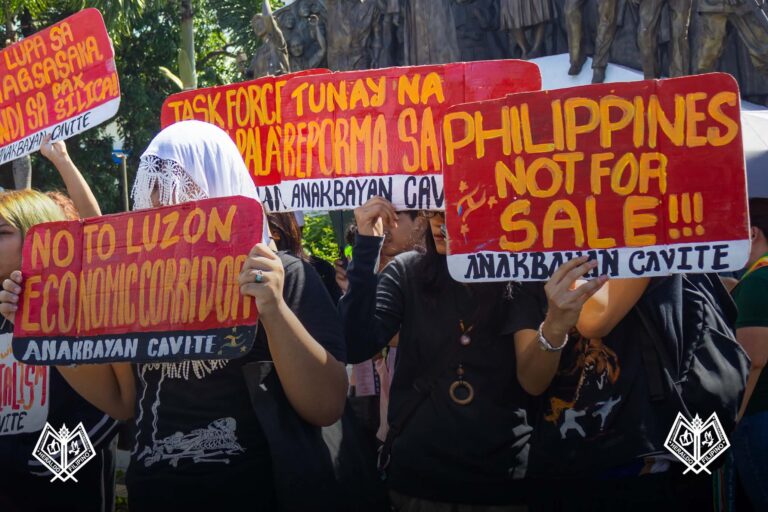
The 21st of August in the Philippines is not your usual holiday—it’s a reminder when activists were silenced by a government that spared nobody. Even Ninoy Aquino Sr., born into a prominent political family, was not exempted from the brutality of the dictatorship. His assassination in 1983 ignited the collective rage slowly pent up by the injustices of the regime, leading to a revolution that changed Philippine history. The importance of August 21, mostly known as “Ninoy Aquino Day,” defines his courage—an enduring symbol of resistance against tyranny.
The country has significantly changed over the decades which established a stronger political opposition after his death. The streets of Epifanio de los Santos Avenue (EDSA) that were once filled by the masses have evolved, taking the same advocacies into the digital arena. Today, social media platforms are leveraged to shed light on the struggles faced by the marginalized, amplifying calls for justice across sectors screaming for their rights. Ninoy’s legacy persists in the digital world—a reminder to push for democratic actions like voting, defending press freedom, and how its impact can be observed today.
Ninoy’s life is often compared to the story of David and Goliath—a voice standing up against an authoritarian regime despite the risks it can inflict upon him. Today, Filipino youth draw inspiration from his valiant actions, no matter their forms. In an era where digital spaces serve as the new public square, clicking the “share” button carries the same weight of perseverance as protesting in the streets, challenging the status quo and raising voices online. This simple act itself mirrors Aquino’s hardship belonging to an era of blatant censorship or guaranteed imprisonment for criticizing the government. Yet, a question remains: how effectively does the active citizenship modeled by Aquino translate into the digital age?
The role of virtual spaces
Across social platforms, hashtags from various trends spread carrying conversations– ideas to transcend towards a massive reach. A single post can travel beyond its creator’s intended circle. But when raising issues becomes as easy as sharing posts, the digital age demands more than mere visibility—it demands conviction.
Social media plays as the intersection of humanity combined into one massive digital space. It acts as the bridge between people, no matter distance, uniting citizens around a shared vision for a progressive society, mirroring Ninoy’s belief that public awareness and passion could awaken the populace to the realities of a tyrannical regime. Whatever shifts the times may cause, collective active citizenship stands unwavering—being bold enough to speak and endure despite criticism.
“We seek solidarity and demand accountability from people in power, lalo na’t not everyone has a voice in traditional spaces,” as expressed by January Ericka Rose Luzada, a second-year BS Psychology student, highlighting how online discourse on social media can bring overlooked social issues into mainstream focus.
The platforms that we use may be digital, but its purpose remains fundamentally human. Every tap and share is a choice—a conscious decision that sheds light on what needs to be seen. What might appear to be a mere digital gesture carries a choice with consequences.
When silence is not an option
During the Marcos regime, Aquino was among the most vocal critics of government corruption, notably questioning the overspending on infrastructures like the San Juanico Bridge. This historical precedent bears not much difference to contemporary controversies surrounding flood control projects—where unfinished projects were often left non-existent which exacerbated disasters into greater tragedies. Fed up with the blatant injustice, Filipinos now demand the return of misappropriated funds, full accountability for those involved, and swift judicial reforms to stop corruption from flooding the nation—exemplifying the values Ninoy Aquino once showed to the masses.
Research institutions have actively documented these ongoing issues. For instance, the UP Center for Integrative and Development Studies leverages its digital platforms to make developing stories accessible to the public functioning as a bridge between academic experts and the everyday Filipino to foster an informed civic participation. Publishing reports on the issue could bear a different set of risks than attending a street protest but it carries the weight of accountability and obligation of transparency.
Other historical controversies such as the 1981 Manila Film Center collapse during the term of Ferdinand Marcos Sr. mirror recent scrutiny over flood control issues under President Ferdinand “Bongbong” Marcos Jr. These parallels expose the deficiencies with our society—the trust to institutions which are devoid of any morality and transparency. When public funds are poured into these anomalies, digital civic participation becomes essential; it empowers everyday citizens to question government deficiencies and uplift the experiences of affected communities.
For Jaicelle Andrade, a third-year BS Psychology student, speaking out against these injustices remains a courageous act: “Being able to speak and stand up for themselves and other Filipinos who are suffering under a governance is one step into the governance we deserve.”
Much like Ninoy’s era, genuine civic engagement requires confronting facts and questioning control. Crucial dissent remains a double-edged sword: while being a critical voice gives dissent its direction, it also leaves anyone exposed to the helm of the authorities.
Who actually gets to speak?
Despite the reach of the internet, reliable access remains a privilege in many parts of the country. As the Manila Bulletin Newsroom expresses, the youth who live in rural, low-income, and indigenous communities have limited digital infrastructures, leaving many citizens without enough digital literacy to document or publicize what others tend to ignore. These platforms must be inclusive extensions of all communities, supported by institutions that help establish a proper, interconnected system.
The digital divide reveals how platform access dictates whose voices can be heard. Ninoy utilized his public platform as a journalist and politician during the time when Filipinos had limited spaces to challenge authority. His determination to speak out despite restrictions inspired others to make themselves heard. While social media has lowered barriers for many, digital illiteracy and poor infrastructure exclude vulnerable populations from conversations that directly affect them.
***
Ninoy Aquino’s legacy endures beyond his death and Filipinos’ ongoing call to action. His life serves as a reminder to question power and turn awareness into impactful deeds. To be an active citizen does not simply end in the online presence; it demands sustained engagement, especially when speaking out is difficult. Behind every screen that exposes oppression is a voice that refuses to be silenced. His gallantry stands not merely as a recollection from the past, but as an obligation to be carried forward by every generation to ignite resistance that endures beyond EDSA.