RECENT PUBLICATIONS |

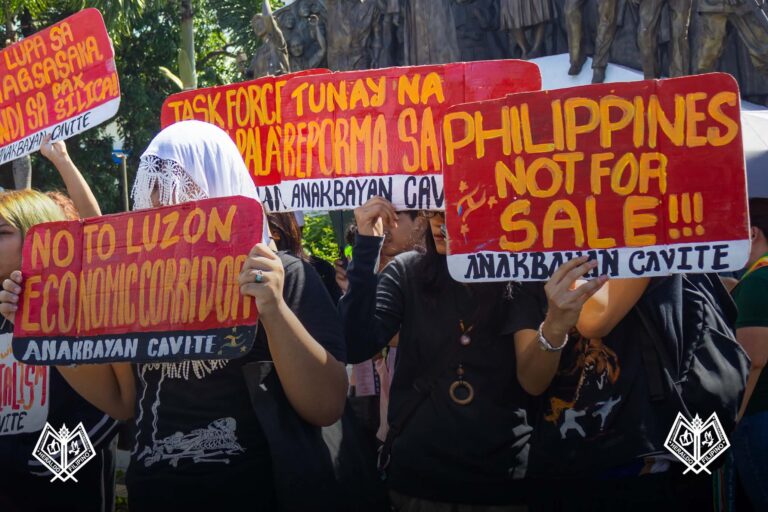
The Ghosts that Martial Law Left Behind
September 21.
This day marks the 54th anniversary of Martial Law—a single declaration signed by former President Ferdinand E. Marcos Sr. that altered the landscape of the Philippines for 14 whole years and, arguably, for the next five decades that followed.
Those who lived under Martial Law were constantly surrounded by fear. Subjected to unreasonable curfews and continuous military supervision, eyes were eventually opened to the reality of a state force destroying communities it was meant to protect.
Citizens endured and fought back with all their might until it all culminated in the streets of EDSA. Yet, as we examine our country today—together with the same recurring patterns of oppression—it becomes clear that remnants of that era still linger in daily life.
Looking back to the past with new perspectives
On September 21, 1972, Marcos signed Proclamation No. 1081, officially declaring Martial Law in the Philippines. The regime justified the declaration by citing rising student unrest, alleged threats of communist insurgency from the newly formed Communist Party of the Philippines (CPP), and the Muslim separatist movement of the Moro National Liberation Front (MNLF).
After the declaration was fully enacted, Marcos immediately issued General Order No. 1, consolidating all government authority into the presidency, and effectively declaring himself the sole dictator. Congress was abolished, and government institutions were closed off to independent oversight. High-ranking politicians were detained, while journalists and student activists faced severe repression, often being arrested on fabricated charges. With all state power now resting in the palm of the president and backed by military force, citizens had no choice but to endure a climate of fear.
The 14-year period was brutal, marked by an iron-fist rule that shackled the country’s growth. For Dr. Jesus “Jigs” Medina, Associate Dean of the College of Liberal Arts and Communication (CLAC), who has taught at DLSU-D for 23 years, the surveillance was pervasive: “Hindi ka rin makagawa kung anong gusto mo dahil ang military ay… minamanmanan tayo.”
Filipinos at the time had to watch every action and word to avoid angering state authorities. Beyond strict surveillance, systemic human rights violations occurred frequently. One notable case was that of that of Archimedes Trajano, a student activist who questioned Imee Marcos during an open forum at the Pamantasan ng Lungsod ng Maynila in 1977. Trajano disappeared shortly after the event, and two days later, his allegedly tortured body was recovered on the streets of Manila.
Trajano’s murder was one of thousands of documented disappearances. These victims were known as “desaparecidos.” As Medina recalled: “…meron mga nawawala na lang at hinuhuli… kukunin ka sa bahay tapos bigla ka nalang mawawala… yung lumalaban pwedeng makulong or mawala nalang sila or mabura nalang sila sa mundo.”
Within hours of the announcement, the military forcibly shut down one news service, seven TV stations, 66 community newspapers, and 292 radio stations nationwide. Only state-sanctioned outlets or those owned by Marcos were allowed to operate—notably, the Manila Bulletin and the Daily Express, alongside the Times Journal, owned by the family of then First Lady Imelda Marcos.
These actions established a culture of impunity where questioning power carried fatal consequences. Martial Law was not a passing event, but the foundation that dictated how our country was governed, and how ordinary Filipinos related to state authority—a framework that continues to influence contemporary politics.
While others claim that martial rule restored order, Medina questioned its true legacy: “Maganda naman yung layunin nila pero ang tanong diyan, totoo ba talaga at nagawa ba talaga?”
As we move forward, should the transgressions of Martial Law be dismissed to move on from, or are they still actively shaping our daily lives, unnoticed?
The reflection of the past
Martial Law did not restructure the country for the public good; rather, it consolidated power to serve the Marcos family and their network of cronies. Private enterprises and media networks silenced under the guise of national security were seized and converted into instruments of personal wealth and political dominance. Unbeknownst to us, this structural transformation did not vanish when Martial Law was formally abolished; its lingering effects persist today.
Juan Ponce Enrile, who served as one of the primary architects of Martial Law, gained immense political influence during the regime’s state abuses, arbitrary arrests, and military enforcement were carried out under his supervision. Decades later, Enrile was charged with plunder and graft for his alleged involvement in the P172-million pork barrel scam, though he was acquitted in 2018. Under the administration of Ferdinand Marcos Jr., Enrile was appointed Chief Presidential Legal Counsel—a stark example of how key figures from the dictatorship remain entrenched in power.
Press suppression also resurfaced in modern governance. ABS-CBN, first seized during Martial Law and later restored to the Lopez family after the 1986 revolution, was forced off the air again in May 2020. The National Telecommunications Commission (NTC) issued a cease-and-desist order following years of public threats from former President Rodrigo Duterte over the network’s critical news coverage. Even decades later, the outcome remains the same: penalizing media organizations that hold power accountable. Press suppression never ended after 1981, it simply adapted to exploit modern legal loopholes.
The end of the dictatorship was less a complete clean break than a restructuring of the existing status quo. While Marcos was removed from office, the courts, political parties, and state infrastructure remained as a framework for successor regimes. The political dynasties that had gained power under the dictatorship carried their advantages into the post-1986 democracy. Today, roughly four out of five members of Congress belong to political families. Despite the 1987 Constitution’s explicit instruction for lawmakers to pass a law banning political dynasties, no such legislation has been enacted by the very officials who benefit from its absence.
As the nation moves forward, it remains trapped in recurring cycles of political exploitation. In an era when our leaders ignore the lessons of the past, the responsibility of preserving the truth falls heavily on the youth.
How the youth continue to remember
The events of Martial Law established a precedent for political dynasties and entrenched governance that persist across generations. How can this oscillating trend of contrasting authorities be formally straightened into one that cares for the Filipino people?
Clarence “Lynx” Garcia, a BIO11 student, noted the continuity of systemic corruption: “Yung views and how corrupt it is, hindi siya masyadong significantly nag-change.” Garcia observed that despite post-1986 promises of reform, successive administrations maintained corrupt practices, leaving public works projects, underfunded education, and compromised political institutions.
Princess Jamiehr “Jam” Chavez from APM11 emphasizes the need for critical media literacy among young people. Given the contrasting narratives surrounding Martial Law—where some frame it as a golden age of discipline while historical records document widespread abuse—Chavez stressed the importance of looking beyond binary views. She linked critical thinking to civic responsibility, emphasizing how historical knowledge shapes one’s vision for the country.
Whether examining economic indicators or personal accounts, one thing is clear—the atrocities that happened far outweigh the propaganda of order. Firsthand testimonies and documented history ensure that the realities of that era cannot be easily erased. Both Chavez and Garcia agree that education and vigilance are essential to keeping awareness alive; listening to survivors, reading critically, and recognizing systemic patterns can ensure we never forget the horrors of the past.
***
As Spanish-American philosopher George Santayana famously wrote, “Those who cannot remember the past are condemned to repeat it.”
If Martial Law has taught us anything, it is the danger of concentrating unchecked power in a single office. Its lingering effects persist to this day in loyalty-based politics and familiar surnames appearing on election ballots, election after election.
For the youth and citizens of the Philippines, remembering the past is an active commitment to preventing its repetition. Rather than treating Martial Law as an isolated blot on history, preserving its lessons remains vital to defending democracy and fighting for systemic reform.