RECENT PUBLICATIONS |

How “Right to Care” Became A Reality
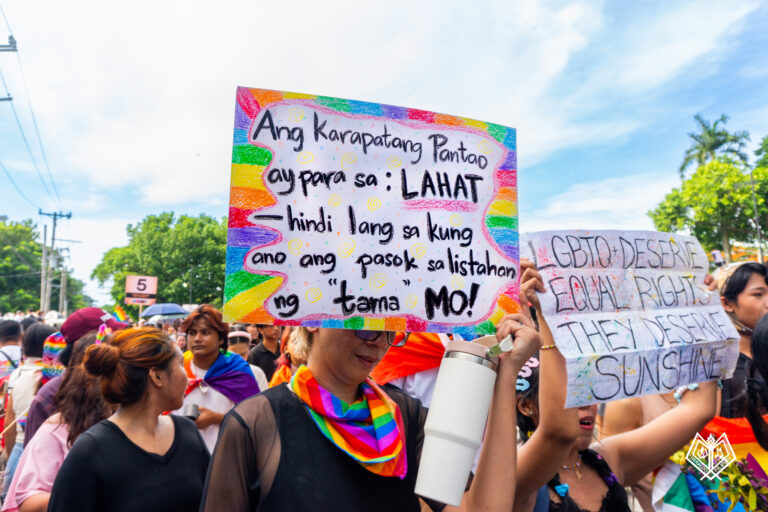
The colors of the rainbow once again shine in their brightest shades, despite the constant gray, torrential rain attempting to drown their glow. June is synonymous with Pride Month—a celebration of the LGBTQIA+ minorities around the globe and a time to raise and wave the flags of its unique colors and identities. In the Philippines, Pride Month is not only a time to celebrate the community but also to amplify its continuing calls for equality and visibility in all sectors of society, including healthcare. These calls resulted in the Right to Care initiative, a legalized option allowing queer couples to make medical decisions for their partners, especially in life-or-death situations.
Under the current Family Code of the Philippines, only legal spouses and family members are allowed to make healthcare decisions for incapacitated adults. This effectively excludes queer couples, especially those in long-term relationships, leaving them vulnerable in life-threatening situations. The Right to Care initiative aims to address this gap by providing a legal framework granting individuals the same authority to make healthcare decisions for their partners when needed. The journey behind the fruition of Right to Care was marked by winding roads filled with obstacles built to deter it, but those hurdles made the initiative stronger.
Reangling and revising in despair
The idea for the “Right to Care card” was sparked by the chilling story that Adrian De Guzman and Paulo Dela Rosa, deputy creative directors of the TREYNA Group and proponents of the program, came across in an online news post. It featured the story of Anril Tiatco and his partner, Alonzo Gabriel, who was denied basic healthcare services, resulting in tragedy. Coupled with the restrictions of the COVID-19 pandemic and the absence of nearby family relatives, Gabriel faced a life-and-death situation. Despite being in a 15-year relationship with Tiatco, the couple was not legally recognized. Left with no choice, Tiatco could only endure the sight of his partner in pain, unable to make decisions on his behalf—a situation that ultimately led to Gabriel’s untimely demise.
This deeply resonated with Dela Rosa and De Guzman, as both identify as members of the LGBTQIA+ community. The duo felt deeply troubled and disturbed with the story of Alonzo Gabriel, recognizing that the same tragedy could happen to countless other queer couples. It exposed a frightening reality to the queer community, thus fueling the Right to Care initiative. The vision for the program was initially bleak, with multiple revisions slowing its progress.
Throughout their respective careers as advertising professionals, both of the creative heads have always been encouraged to think outside the box, always coming up with unique solutions—with the brightest ideas often rooted in personal outlook.
“Doon lalabas ‘yung creative juices with intent and personal advocacy,” De Guzman explained in an interview with the HERALDO FILIPINO. The lengthy process of research and conceptualization required significant time, energy, and resources. According to Dela Rosa, the program underwent two to three years of development before reaching the public, until it was first launched in Quezon City.
Throughout the conceptualization phase, the team developed different approaches on how to execute the program. It was initially known as “We Are Family Too,” a form of membership card that aimed to give privilege for queer couples to stay beyond hospital visitation hours. The concept was eventually scrapped because of legal obstacles and limited interest from healthcare institutions.
With the team at a standstill after facing repeated rejections from their executives and intended clients, the idea was shelved indefinitely.
“We got so many rejections, but Roman told us to hold on to that and baka mag-mature pa ‘yung idea,” De Guzman added.
Despite the constant revisions and feelings of hopelessness, the creatives did not give up. The determination to bring the program to life only grew stronger over time. After discussions with various stakeholders, especially those in the legal sector, they revisited the idea with fresh concepts supported by a strong legal framework.
“We contacted our in-house lawyers and nag-inquire kami sa legal assistance group ni Chel Diokno. Doon namin nalaman ‘yung loophole, which is the Special Power of Attorney,” said Roman Olivarez, executive creative director of the TREYNA Group.
The discovery of this legal framework gave the team the push they needed—an ace up their sleeve—solving the legal battles they faced and finally turning the concept into reality. This came through the Special Power of Attorney (SPA) which granted their trusted representatives the power to make healthcare decisions on their behalf. The document is legally backed by Article 1883 of the Civil Code of the Philippines, under which medical decisions are considered acts of administration that can be appointed through a legal representative.
With this information in hand, the team was ready to share its ideas with both public and private sectors, hoping to forge the rainbow-colored path toward more inclusive healthcare.
The rainbow-colored path ahead
The clock was ticking, and with the idea now fully matured, it was only a matter of time before the project risked being shelved once again. The team approached multiple local government sectors, pitching the program as a small government side project. The same story played out: multiple rejections, with some promising a callback that never came.
That is, until Mayor Joy Belmonte of Quezon City picked up the call and heard the pitch herself.
The meeting with Mayor Belmonte was considered by the team to be a once-in-a-lifetime chance made possible by impeccable timing that arose from scheduling mishaps. What started as an appointment with the Quezon City Gender and Development Office turned into something bigger, as they were invited to the planning phase of the city’s upcoming Pride celebration.
“Since busy ang buong Gender and Development Office, sinabay na lang nila kami sa meeting, and doon namin nakilala si Mayor Joy and Congressman Perci [Akbayan Rep. Percival Cendaña],” Olivarez explained.
The team went all in, knowing the meeting would decide the fate of the program—a do-or-die situation right up in their hands. After explaining the details of the Right to Care initiative, Belmonte’s reaction surprised the team—not because it was negative, but because she immediately recognized that injustice towards minorities was happening under her watch. This pushed the program from being a small project to a citywide ordinance. The team was subsequently tasked with launching the program onstage at LoveLaban PH 2023, the biggest Pride event in Southeast Asia.
Thunderous applause filled the stage, while reactions on social media came tremendously positive. Many realized how legally vulnerable they were—leaving them at the mercy of the law—which the creative heads emphasized in the execution itself. The program, now in full swing and recently enacted in Dasmariñas City, continues to give hope to LGBTQIA+ couples. It seeks to ensure that what happened to Alonzo Gabriel is never repeated by preventing another tragedy caused by legal limitations.
The growing number of cities adopting the ordinance has left the team ecstatic. De Guzman said the initiative has grown far beyond its creators as more cities—now eight—adopt the ordinance, and discussions continue at the national level.
“It’s bigger than all of us,” he said.
The inclusivity of it all
The Right to Care program became a landmark victory for the LGBTQIA+ community, born from the ambition to create an inclusive healthcare program that looks past sexuality. The idea became the stepping stone for House Bill No. 11005, introduced by Akbayan Rep. Cendaña and later approved by the House of Representatives (HoR). The bill is now before the Senate as Senate Bill No. 1534, also known as the “Right to Care Act,” introduced by Sen. Risa Hontiveros. The bill is a heartwarming letter addressed to the community, and a eulogy for those who needed the same protection but received it too late.
The inclusivity of the program extends far beyond minority groups; it also helps patients with distant family relatives to appoint trusted representatives, regardless of the nature of their relationship. Medical professionals, who operate under extreme time constraints where every second wasted waiting on family decisions is a matter of life and death, can also benefit from the bill.
As Dela Rosa explained, the program’s name is rooted in their personal advocacy, passion for change, and something that is fundamentally human. For him, fighting for equality should have been at the hands of the lawmakers, the ones who are meant to serve the public in the first place, including marginalized communities.
“We have to be inventive, kasi ang pangit lang na nasa atin ang burden of fighting for our rights. I am just glad na even though niche lang ‘yung nakikiliti ng Right to Care, there is still change,” Dela Rosa said.
His words ring true as the community is largely left to fend for themselves for protection, visibility, and equality. The Right to Care program should have been born from the grace and compassion of politicians, but in a country backed by hell-bent religious doctrines that villainize the LGBTQIA+ community more than corrupt politicians, they are left with little to no choice but to do it themselves. The lack of progress in passing the SOGIE Bill, after more than 20 years since its introduction, proves that for many lawmakers, the rainbow is interpreted as nothing more than a child’s fairytale—wholly appreciated, but not treated with utmost importance.
***
The country is now experiencing a wrinkle in time, marked by the glow of the rainbow extending its rays toward acceptance, and hopefully, equality. The Right to Care initiative is a welcoming step toward societal inclusion. With multiple policymakers taking notice, may this be a call for them to step up and present policies that benefit everyone, regardless of their sexual orientation. May this be a reminder that they serve all the people, including minorities, and it is their obligation to approve legislation that prioritizes the security and stability of those who need it most.
The state of the healthcare system in the country is already abysmal, and coupled with laws that continue to prioritize heteronormative couples, minorities are left to scramble—clinging to desperation just to ensure their survival. Fueled by the growing need for visibility, the Right to Care card illuminates these issues and brings legally backed, tangible solutions.
For some, it may just be a mere ordinance or a plastic card, but for those who live in constant fear and anxiety of an unjust society, it is the saving grace they need most when death knocks upon their door.
Photo slider by Angel Lorraine Bulda